


Biotech

The biotech sector is showing signs of recovery from a historic downturn, with increased dealmaking and venture funding. At the J.P. Morgan Healthcare Conference, attendees expressed renewed optimism, but also caution that the rebound may not last. Factors such as China's rising biotech ecosystem, FDA unpredictability, and the potential for another bubble were discussed. Experts emphasized the need for discipline to avoid repeating past mistakes.

AstraZeneca has acquired vaccine startup Omniose for undisclosed terms, gaining bioconjugation technology for conjugate vaccines. The FDA has requested updated prescribing information for GLP-1 therapies to include the potential risk of NAION, a rare vision-loss condition. Compass Pathways has completed a U.S. approval application for its synthetic psilocybin drug COMP360 for treatment-resistant depression. Zura Bio's tibulizumab missed the primary goal of a Phase 2 trial in hidradenitis suppurativa, causing shares to plunge. Abeona Therapeutics acquired a Phase 3-ready eosinophilic esophagitis treatment from Ellodi Pharmaceuticals.
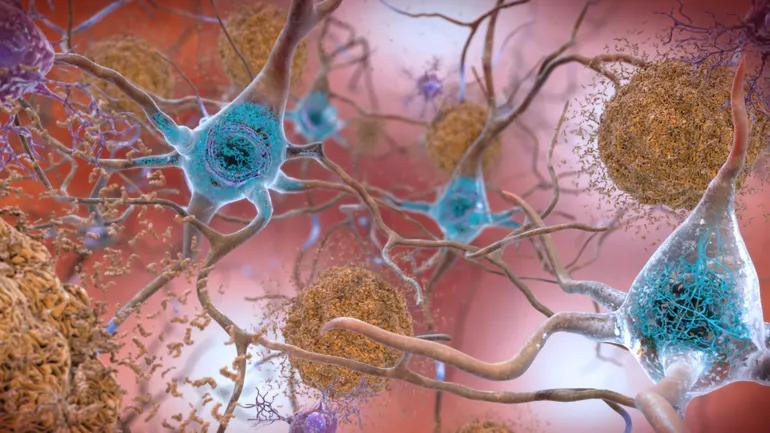
Oyster Therapeutics, a London-based biotechnology startup, has raised $60 million in an extension of its Series A round to support the development of tau-targeting protein degraders for neurodegenerative conditions such as Alzheimer's disease. The company's lead program uses a linker that splits the drug into two small molecules to enhance brain penetration and specifically targets disease-causing forms of tau. Oyster, formerly Kesmalea Therapeutics, is also collaborating with Massachusetts General Hospital to study a neurotoxic form of tau and is exploring applications in cancer and immunology. The Series A-2 round was led by 4BIO Capital with participation from eight other investors, including Eli Lilly.
BIO released 'BioAdvance: Securing America's Biotech Century,' a policy action plan with seven priorities for Congress and the Trump administration to maintain U.S. leadership in biotechnology. The proposal calls for a White House Office of Biotechnology, faster drug development, improved clinical trial infrastructure, increased investment, and stronger support for biomedical research. It comes as China's biotech sector advances, starting over a quarter of global clinical trials and aiming to develop a quarter of first-in-class drugs by 2030. BIO opposes broad restrictions like adding biotech to the COINS Act, arguing they could weaken U.S. competitiveness. Investors and CEOs generally welcome the plan but note that incentives and staffing must align for it to succeed.
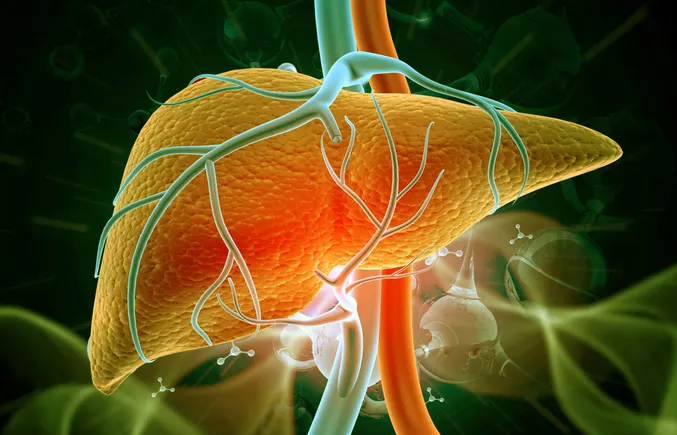
Vir Biotechnology announced that its experimental two-drug combination of elebsiran and tobevibart succeeded in the first of three Phase 3 trials for chronic hepatitis D. After 48 weeks, 44% of treated participants largely eliminated detectable signs of the virus and normalized levels of an important liver enzyme, compared to none in a delayed-treatment cohort. The regimen also met a key secondary endpoint, with 79% of treated patients achieving a treatment response. Two additional Phase 3 trials are ongoing, with data expected early next year, and positive results from all three would support a regulatory submission in 2027. Vir, which initially focused on infectious diseases and brought the COVID-19 antibody drug Xevudy to market in 2021, has since restructured to primarily work on T-cell engagers for cancer but retained its hepatitis D program. Hepatitis D is a liver infection that only occurs in people already infected with hepatitis B and affects about 5% of people with chronic hepatitis B worldwide, according to the WHO. Treatment options are limited but changing, with the FDA approving Gilead's Hepcludex earlier this year and Mirum Pharmaceuticals' acquired drug succeeding in a Phase 3 trial in September. Evercore ISI analyst Cory Kasimov predicted Vir's combination should become the preferred medicine for hepatitis D and a dominant front-line product upon approval, noting the results compare favorably to rival therapies. Vir shares rose about 12% in early Monday trading.
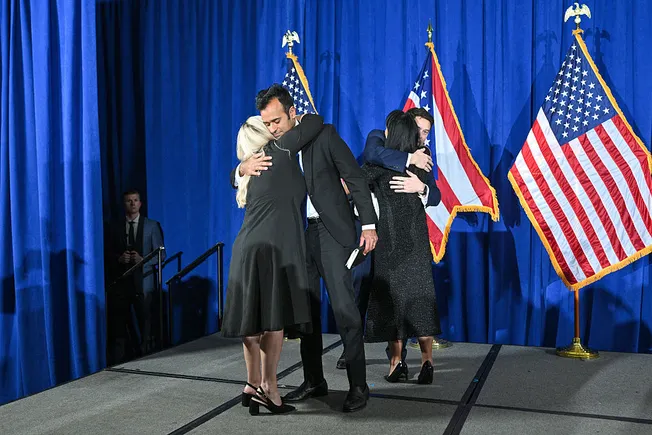
Vivek Ramaswamy lost Ohio’s governor race amid a surge of Democratic support. In the final days, six biotech leaders urged him to withdraw a TV ad featuring his opponent’s estranged mother, criticizing it for ignoring documented childhood trauma. The ad had already drawn bipartisan criticism. Ramaswamy defended it. The rebuke from the biotech industry raises questions about his characterization as a “successful biotech entrepreneur.” His company Roivant built a network of drug developers, but Axovant’s Alzheimer’s drug intepirdine failed a pivotal trial in 2017. While Roivant later achieved success with other medicines, the episode highlights the gap between raising money and producing clinical evidence. Roivant’s current CEO publicly disagreed with Ramaswamy’s attacks on the FDA. The article examines these facts and their implications for his political career.
Eli Lilly will offer its obesity drugs Zepbound and Foundayo on Hims & Hers' telehealth platform at self-pay prices. Alnylam Pharmaceuticals announced Chief Commercial Officer Tolga Tanguler is leaving as its share price has fallen about 60% this year. Boehringer Ingelheim formed a wide-ranging alliance with China-based Sino Biopharmaceutical focused on next-generation cancer drugs, with $358 million in upfront and near-term payments and up to $7 billion in additional consideration. Servier's sevasemten, acquired from Edgewise Therapeutics for $1.55 billion upfront, failed a mid-stage trial in Becker muscular dystrophy. Ultragenyx will cut 1,000 employees, or 20% of its workforce, and halt studies of its Angelman syndrome gene therapy and shelve a Wilson's disease candidate. ANI Pharmaceuticals offered to acquire Egetis Therapeutics for $560 million.

BioPharma Dive's latest charts series examines how investors responded to three drug launches featured in this week's earnings presentations. Novo's oral Wegovy posted third-quarter sales of 5.39 billion Danish kroner (about $811 million), surpassing consensus and lifting shares over 5%, while Eli Lilly's rival Foundayo underperformed. Madrigal's Rezdiffra reached blockbuster status with $1.1 billion in 2026 sales through September and $431 million in the third quarter, beating projections and driving the company's first profit. Axsome's Auvelity, approved in April for Alzheimer's disease agitation, saw sales rise to $208 million but growth has trailed investor hopes, and the stock has fallen more than a third since June.
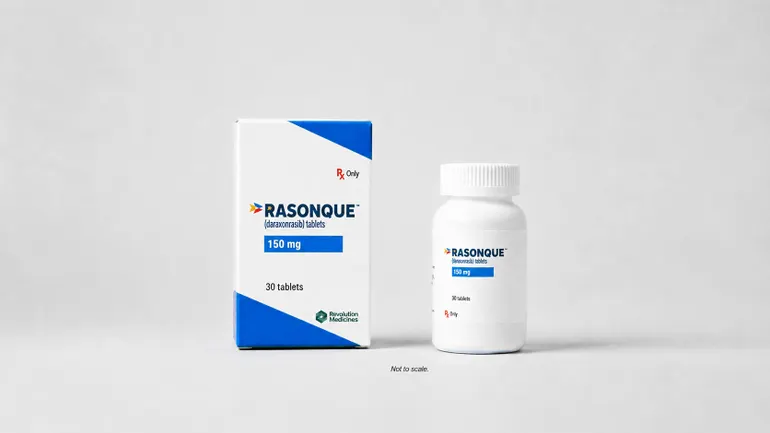
Revolution Medicines reported $198 million in third-quarter revenue for Rasonque, its newly approved pancreatic cancer treatment, far exceeding analyst estimates of $50 million to $100 million. The drug, approved by the FDA on Aug. 26, treated over 5,000 U.S. patients in just five weeks. Analysts call it the best oncology drug launch in history, with forecasts of $426 million in Q4 sales and over $3 billion next year. Rasonque is priced at $39,800 for a 30-day supply, and most insurers are covering it. The company is also studying the drug in other tumor types.
T-Therapeutics, a U.K.-based T cell engager drugmaker, has secured $133 million in Series B funding to support clinical development of its cancer and immune drugs. The lead program, TTX-008, is a bispecific antibody targeting a pan-tumor driver, while TTX-018 is designed for autoimmune conditions. Neither has entered human testing yet. The financing will help generate proof-of-concept data for both. The company's core technology provides fully human T-cell receptors with high affinity and specificity, potentially enabling access to previously undruggable intracellular targets. Backers include Advent Life Sciences and British Business Bank, along with Eli Lilly, Johnson & Johnson's venture arm, Samsara BioCapital, and Sofinnova Partners. T cell engagers are a hot area of research, with ten approved by U.S. regulators, mostly for blood cancers, and increasing interest in solid tumors and autoimmune diseases.