


Clinical Trials
BioNTech announced that its experimental mRNA cancer immunotherapy BNT 113, combined with Keytruda, did not meet the primary endpoint of progression-free survival in a late-stage study for head and neck squamous cell carcinoma driven by high-risk HPV. The data monitoring committee recommended continuing the trial to evaluate overall survival, the study's other main objective. The company's shares fell about 6% in early trading. This setback follows other mixed results from BioNTech's oncology pivot, including a colorectal cancer study failure earlier this year.

First Tracks Biotherapeutics reported that its experimental drug ANB033 produced statistically significant improvements in celiac disease signs and symptoms compared to placebo in a six-week early-stage trial. The drug, which blocks CD122, also prevented symptom increases during a gluten challenge and showed no serious adverse events. The company plans to report data from a second cohort in Q1 next year and start a late-stage trial in 2027. Analysts view the results as impressive and comparable to Teva's recent data, with potential across multiple autoimmune diseases.

Bristol Myers Squibb reported that its experimental IPF drug admilparant met its primary endpoint in a Phase 3 trial at the 60 mg dose, significantly slowing forced vital capacity decline versus placebo over one year. However, the 120 mg dose did not achieve statistical significance, prompting analyst concerns about the lack of dose response. The company said the drug was well tolerated. Admilparant is the most advanced LPA1 receptor antagonist, a class with a history of safety and efficacy setbacks. Bristol Myers shares initially rose 6% pre-market but closed down about 4%. Contineum Therapeutics, which has a competing LPA1 drug, saw its stock fall 30%. Separately, Bristol Myers reported success in a late-stage study of radiopharmaceutical RYZ-101 for neuroendocrine tumors, acquired via the $4.1 billion RayzeBio buyout.

Argenx shares fell 15% Thursday after an independent monitoring board recommended ending a Phase 3 study of Vyvgart in Sjögren’s disease for futility, surprising analysts who expected results in 2027. The failure removes a potential $1.4 billion peak sales opportunity for the Vyvgart franchise. A separate announcement of successful Phase 2 research for a new celiac disease drug, FB102, failed to reassure investors. Analysts noted the Sjögren’s setback was high-risk and not included in models, but success would have brought significant upside. Argenx, valued at around $50 billion, continues to expand Vyvgart, which is approved for myasthenia gravis and CIDP, with peak sales estimates of $11-17 billion. The company also acquired FB102 through a $2.2 billion takeover of Forte Biosciences, with Phase 2 data showing prevention of gluten-induced intestinal damage.

Cerevance, a Takeda-backed private biotech, announced Wednesday that its drug solengepras succeeded in a late-stage trial for Parkinson's disease. The drug, which inhibits a protein involved in motor function rather than targeting dopamine, reduced daily off time by 0.61 hours versus placebo at 12 weeks in patients with motor fluctuations on levodopa. On time improved by 0.60 hours, barely reaching statistical significance. Safety was generally well tolerated, with mild to moderate adverse events. Cerevance plans to discuss next steps with the FDA.

ArriVent BioPharma's late-stage study of furmonertinib in EGFR exon 20 insertion mutation lung cancer failed to meet its primary goal, showing only a 1.5-month improvement in progression-free survival over chemotherapy. The news sent shares down more than 50% in pre-market trading. The drug, already approved in China for certain lung cancers, was being tested as a first-line monotherapy. ArriVent CEO Bing Yao said the company will evaluate the data to determine next steps. The EGFR exon 20 insertion mutation space is competitive, with J&J's Rybrevant and Takeda's Exkivity (withdrawn) among the first targeted therapies, and others like AstraZeneca and Taiho/Cullinan advancing candidates.
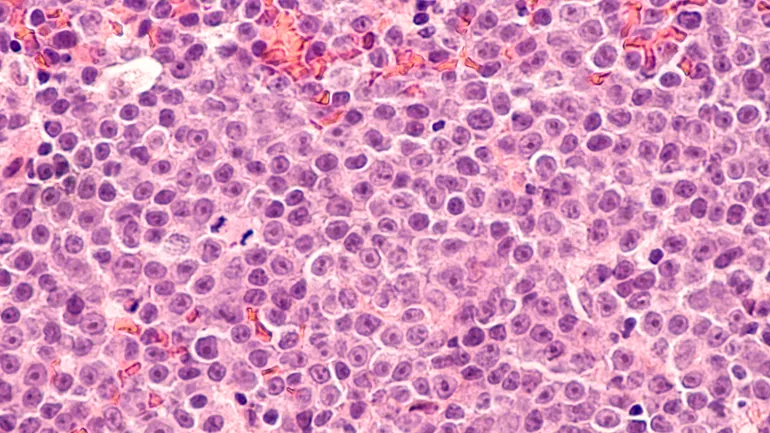
In a Phase 3 trial, Genmab and AbbVie's Epkinly plus chemotherapy cut the risk of disease progression or death by 51% compared to chemotherapy alone in newly diagnosed diffuse large B-cell lymphoma (DLBCL). The results exceeded investor expectations and topped Roche's Polivy, positioning Epkinly to become the first drug of its kind approved in first-line DLBCL. Genmab shares rose as much as 14%. Analysts see blockbuster potential, with peak sales estimates ranging from $1.4 billion to $3 billion annually, though competition looms from Roche's Lunsumio and AstraZeneca's Calquence.
The Progress Profile: Alzheimer’s Research in Focus podcast returns for Season 2, featuring four episodes that delve into critical conversations about Alzheimer’s and brain health. Episodes cover bridging science and lived experience, policy and equity in dementia care, advocacy and awareness across neurodegenerative diseases, and patient perspectives on risk and prevention. Experts including Dr. John Harrison, Dr. Lon Schneider, Dr. Stephen Salloway, Dr. Phyllis Ferrell, Maria Carrillo, Ph.D., and Dr. Wiesje van der Flier discuss advances in early detection, blood-based diagnostics, emerging therapies, and the importance of patient and caregiver perspectives in shaping research and care.

Ultragenyx's stock nearly halved after its Phase III study of the Angelman syndrome candidate drug GTX-102 (apazunersen) failed to meet primary and secondary endpoints. The company plans to evaluate the drug program and seek significant cost reductions, focusing on marketed products, aiming for profitability by 2027.
Novartis announced on Tuesday that its oral BTK inhibitor remibrutinib met primary endpoints in two Phase III clinical trials for relapsing multiple sclerosis, significantly reducing annualized relapse rates and brain inflammatory lesions, with no liver safety concerns observed. Following this news, Novartis shares rose more than 4%.