


Deals

Caribou Biosciences, a CRISPR gene editing startup co-founded by Jennifer Doudna, has decided to stop developing its two main cell therapy programs due to a challenging financing environment and will evaluate strategic alternatives, including a potential reverse merger or acquisition. The company has $114 million in cash and a negative enterprise value of roughly $20 million, making it an appealing shell for private biotechs seeking a Nasdaq listing. Analysts expect Caribou to attract significant interest from private companies, though its discontinued assets may struggle to find a new home.
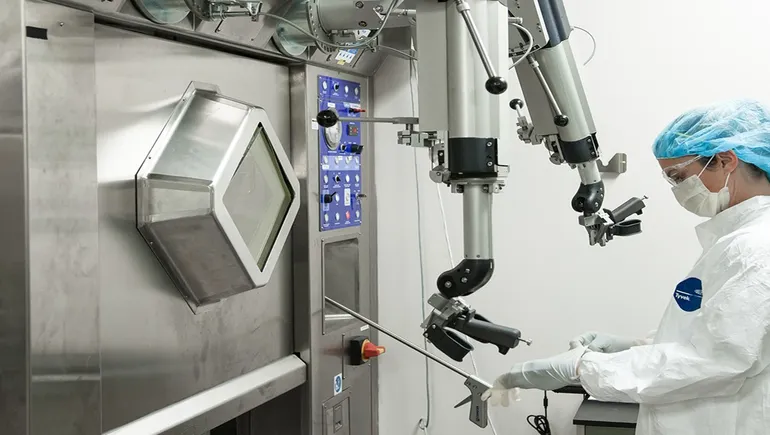
GE HealthCare said Monday it will acquire Sofie Biosciences for $945 million in cash, adding a U.S. contract manufacturing network for PET radiopharmaceuticals. The deal, expected to close in the first half of 2027, will integrate Sofie into GE HealthCare's pharmaceutical diagnostics business, PDx, and includes U.S. rights to the pipeline radiotracer FAPI-74. Sofie, which already manufactures GE HealthCare's Flyrcado F18 injection, will remain an independent manufacturing partner to its customers and operate its 15 U.S. CMO sites. GE HealthCare expects the acquisition to contribute to revenue growth and adjusted EPS in the first full year of ownership.

Shionogi announced a $2 billion cash acquisition of IntraBio, gaining Aqneursa, a drug approved for Niemann-Pick disease type C and Ataxia-Telangiectasia. The deal will make IntraBio a wholly owned subsidiary of Shionogi's U.S. division and bolster Shionogi's rare disease portfolio, which includes Radicava. IntraBio reported $68 million in 2025 sales. Shionogi will assess the transaction's impact on its financial outlook for the fiscal year ending next March.

The Nobel Prize in Physiology or Medicine has been awarded to Peter Hegemann, Georg Nagel, and Karl Deisseroth for their work on optogenetics, a method using light to control neurons. In business news, Alector has licensed its enzyme replacement therapy AL050 to Roche's Genentech for $100 million upfront and up to $1.17 billion in milestones; CSL will pay Alentis Therapeutics up to $1.6 billion to co-develop the kidney disease drug lixudebart; the FDA has expanded approval of Eli Lilly's Jaypirca as a first-line treatment for certain leukemias; and Bayer plans to invest $2.2 billion in a new drug manufacturing site in New Albany, Ohio.
Sanofi and Regeneron have expanded their alliance to develop new immune-regulating drugs similar to Dupixent. The companies will co-develop and co-commercialize four long-acting, Regeneron-invented antibodies targeting IL-13 and/or IL-4, with the most advanced candidate, REGN20423, in early-stage trials for eczema. Regeneron will lead R&D and receive $1 billion upfront, with up to $7 billion in milestone payments. Sanofi will handle global commercialization. The existing profit-sharing agreement for Dupixent remains unchanged. The move may help address patent expiration concerns and sets the stage for future collaborations.
Novo has agreed to pay Hengrui Pharma $300 million up front for rights to HRS-1596, a once-weekly oral obesity drug, with up to $2.6 billion in development, regulatory and commercial milestones. The deal grants Novo rights outside China, Taiwan and nearby territories. HRS-1596, which targets GLP-1 and GIP like Zepbound, is Phase 1 ready and has not yet been tested in humans. The move is part of Novo's efforts to regain ground lost to Eli Lilly in the obesity market, following a series of deals and restructuring. Hengrui has become a popular licensing partner, signing six deals with U.S. or European drugmakers since early 2025.
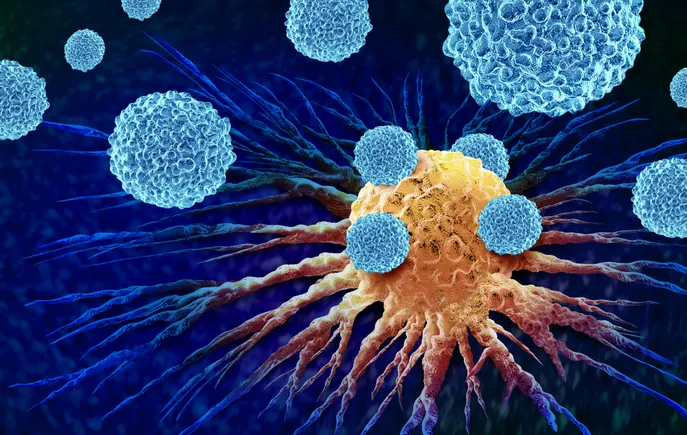
AstraZeneca announced a $2 billion equity investment in Summit Therapeutics, acquiring about 12% of the company, and a broad alliance to test Summit's PD-1/VEGF drug ivonescimab with AstraZeneca's oncology portfolio. The deal aims to accelerate development of ivonescimab, which showed promising Phase 3 results against Keytruda but faces debate over global applicability. Analysts view the move as a lower-risk way for AstraZeneca to combine its drugs with PD-1/VEGF blockers and secure a position in the competitive field.
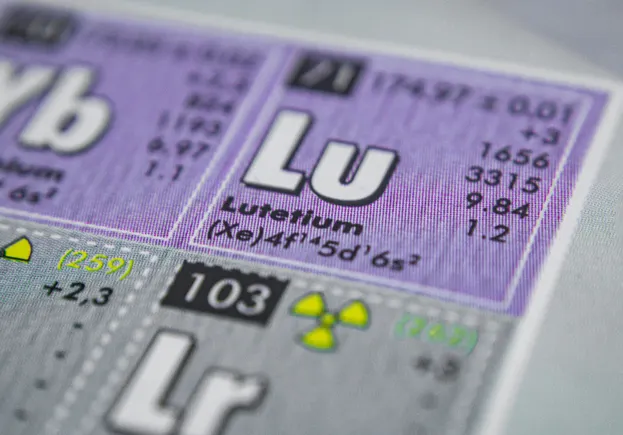
Telix, an Australian radioactive diagnostics seller, announced Sunday it will acquire German radiopharmaceutical developer ITM for $1.65 billion upfront, plus up to $700 million contingent on approval and sales targets for ITM-11. The deal, expected to close by the end of Telix's 2026 fiscal year, will give Telix shareholders about 76.3% of the combined company. ITM-11, a potential rival to Novartis' Lutathera, was rejected by U.S. regulators last month due to manufacturing concerns. The acquisition adds isotope manufacturing and distribution across more than 65 countries, which Telix says will provide greater control over the radiopharmaceutical value chain.
Novo has signed a deal with fellow Danish company Orbis Medicines to discover multiple macrocycles that could replace injectable medicines, with Orbis eligible for up to $1.4 billion in upfront and downstream payouts plus sales royalties. The companies did not specify the number of drugs or diseases, only that they will pursue unnamed cardiometabolic targets. Macrocycles may help overcome limitations of standard oral peptides, such as poor digestive absorption. The deal is part of Novo's broader reboot after losing leadership in obesity and diabetes to Eli Lilly, which includes CEO changes, layoffs, board reshuffling, a rebranding to drop 'Nordisk' from daily use, and heavy investment in AI. Orbis, which launched with $93 million in January 2025, uses its nGen platform to model and design orally bioavailable molecules.
Novartis will pay $125 million upfront to acquire full ownership of Sironax's blood-brain barrier crossing delivery platform. Sironax, a Boston-area biotech, announced Tuesday that Novartis exercised its option under a prior agreement. Sironax retains rights to develop, manufacture, and commercialize certain assets and will use proceeds to advance three early-stage programs, including SIR2501 for ALS and chemotherapy-induced peripheral neuropathy, which has FDA fast track designation. The deal highlights industry efforts to overcome the blood-brain barrier challenge.