


Latest news
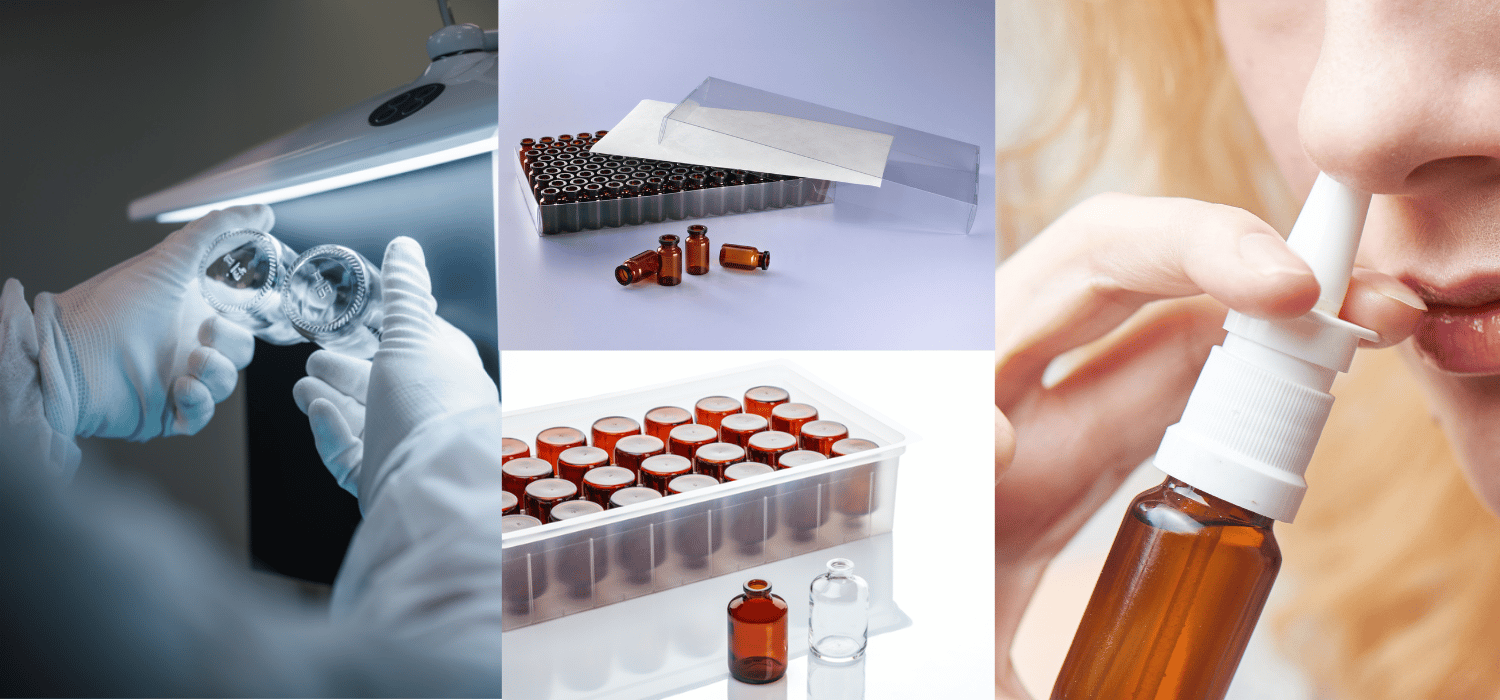
SGD Pharma will exhibit its expanded portfolio of molded and tubular pharmaceutical glass packaging at CPHI Milan 2026 (booth 11F17, 6–8 October). The company will debut MySterinity Nasal, a new range of Type I molded vials for nasal drug delivery, launch Ready-to-Use tubular vials for sensitive parenteral drugs produced at its Felino, Italy ISO 5 site, and introduce MySealian, a GMP-compliant subcontracting service that applies its Sealian internal treatment to customers' existing molded glass vials. Sealian will also be available for SGD Pharma's new tubular vial solutions. CEO Olivier Rousseau noted the company's positioning one year after acquiring Alphial and its ESG-integrated innovation approach.
ACTO announced it has been named a Luminary in Everest Group's Innovation Watch: Agentic AI in Life Sciences Commercial 2026. The report evaluates 22 agentic AI providers across market performance and ecosystem drivers. ACTO was recognized for its role-based SuperAgents, cross-platform orchestration, and life sciences-focused governance. The recognition follows ACTO's inclusion in Everest Group's Top 50 Pharmaceutical Technology Providers for 2026. ACTO's AI strategy began in 2022 with LAICA and evolved into SuperAgents launched in 2026. The company serves 14 of the top 50 pharmaceutical companies and is FDA 21 CFR Part 11 validated and SOC 2 Type II certified.

Cresset has launched the Flare AI Client, released as part of Flare V13, allowing computational chemists to connect company-approved AI providers such as Claude Code and GitHub Copilot directly within Flare. The tool enables researchers to set up, execute, and analyze complex molecular design and modeling workflows using natural language, automating routine tasks and reducing hours of software operation to minutes of scientific review. According to CEO Dr Tim Cheeseright, the goal is to help scientists get more value from existing approved AI tools and spend more time making scientific decisions rather than operating software. The Flare AI Client is available now as part of Flare V13.
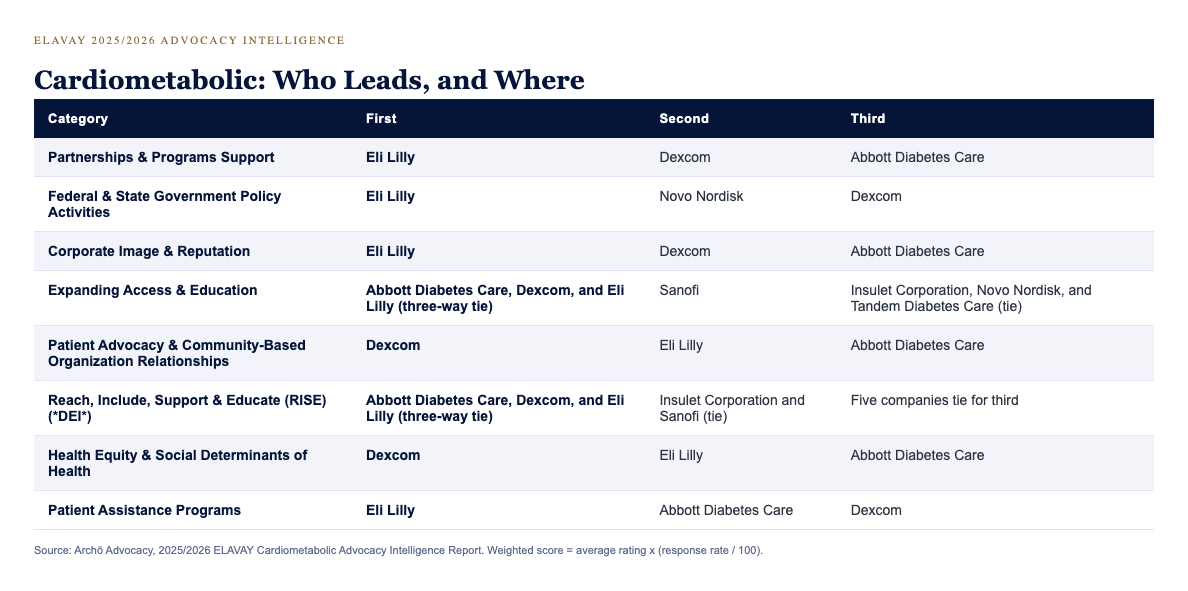
Archō Advocacy released its 2025/2026 ELAVAY Cardiometabolic Advocacy Intelligence Report, which measures trust among diabetes and cardiometabolic advocates. Eli Lilly finished first or tied for first in six of eight categories and placed in the top three in all. Dexcom led in health equity and advocacy relationships, ahead of all pharmaceutical companies. Device makers—Dexcom, Abbott Diabetes Care, Insulet, Medtronic, and Tandem—featured prominently, with Insulet earning a perfect 7.00 on the Scale of Selflessness. Advocates cited Lilly's unrestricted funding and empathy, while device companies were credited for community engagement and criticized for pipeline opacity. Cardiometabolic advocates uniquely expect the Inflation Reduction Act to benefit patients, with four in five anticipating a positive effect. The report also introduces the Advocacy Influence Diagnostic (AID) tool.

IQVIA has launched IQVIA Life Science Models, a suite of purpose-built models for life sciences that combine proprietary expert content, domain knowledge, and regulatory, compliance and privacy frameworks. Built with technologies including NVIDIA Nemotron and supported by AWS infrastructure, the models connect molecular and treatment information with patient journeys and clinical outcomes to enable predictive applications across clinical development, such as clinical study simulation and protocol optimization, digital twins and synthetic controls. In initial evaluation across 50 trials and 270 endpoints, 85% of predictions were on target or clinically close. IQVIA EVP Pete Groves said customers can essentially run the trial before running the trial.
CRIO has introduced AI eSource Builder, a product that creates an initial draft of a research site's eSource study build from the protocol, supporting documents and site preferences. At early adopter sites, it saves an average of 4 hours per study build, with savings increasing over time through a feedback loop. Study designers review and refine every draft before finalization. The tool uses only study design documents, so no ePHI or subject-level data is involved, and CRIO's agreements with AI model providers prohibit training on customer data. CRIO provides 150+ build rules that sites can adjust. The product is the latest step in CRIO's work to apply AI to reduce site burden without replacing site judgment.
INmune Bio Inc. (Nasdaq: INMB) and Quantum Computing Inc. (Nasdaq: QUBT) have announced a collaboration to apply quantum computing, artificial intelligence, and data analytics to identify new potential applications for XPro (XPro1595), INmune Bio's investigational treatment for Alzheimer's disease and other conditions. The collaboration combines INmune Bio's preclinical and clinical trial data with QCi's Dirac-3S quantum optimization machine to uncover disease relationships and prioritize indications. The Stage 1 engagement represents QCi's first commercial customer in the pharmaceutical and biotechnology market, with options for additional work as INmune Bio advances its clinical programs.
Welo Life Sciences, a Welo Global brand, has launched Glass PV, an AI-enabled pharmacovigilance case translation platform. Glass PV converts scanned adverse event documents—including handwritten notes, mixed languages, and complex layouts—into translated PDFs with structure intact at scale. According to Welo Life Sciences' measurements across completed cases, close to 100% are delivered within the required 12- or 24-hour regulatory window. The platform uses per-case pricing without separate translation, formatting, or project management fees. It combines document intake, text extraction, expert review, translation, and layout reconstruction in one workflow, with specialist linguists reviewing translations. Glass PV maintains an audit trail, offers enterprise single sign-on and role-based access controls, processes data within secure infrastructure under a data processing agreement, and supports more than 300 languages.
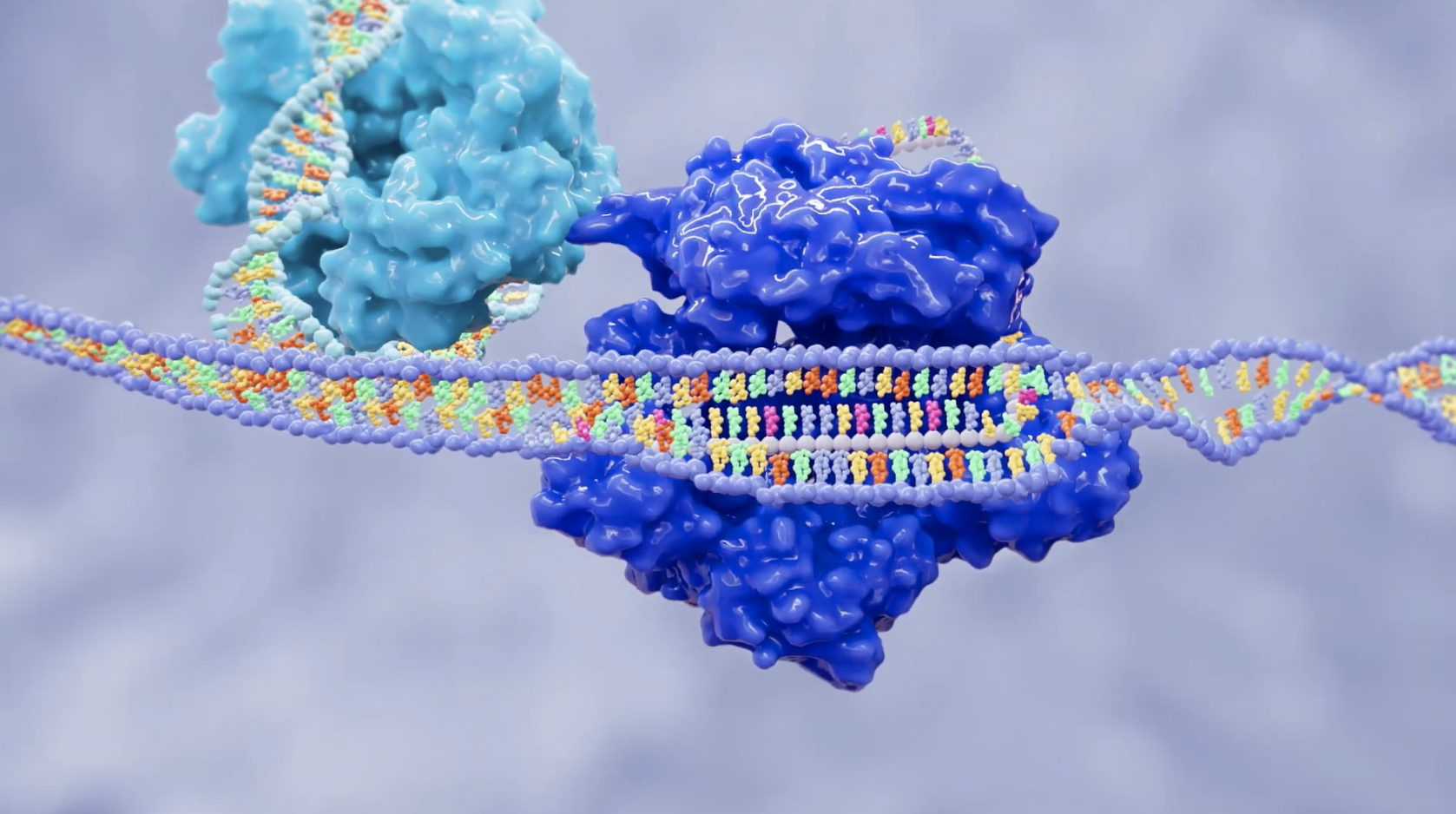
Integra Therapeutics announced the appointment of Simon Dew as Chief Business Officer. Dew brings extensive executive experience in business development, licensing, corporate strategy, and alliance management from roles at Macomics, ReNeuron, Mereo BioPharma, Evox Therapeutics, Gyroscope Therapeutics, and Astellas Pharma. He will help build alliances to maximize the reach and value of Integra's FiCAT gene writing platform, which is in preclinical development for next-generation CAR-T therapies and gene therapy.

NeuroVista Labs, based in Curitiba, Brazil, announced that its synthesized research compounds have entered in vitro testing in Brazilian laboratories. This milestone transitions the neuroplasticity drug discovery program from theoretical and computational research to experimental evaluation. The studies will assess biological activity to guide future development decisions. The company is conducting research in Brazil while focusing its development strategy on the U.S. market. CEO and Lead Scientist Ravi Kaiut stated that advancing to laboratory testing allows generation of experimental evidence to support the strategy. The program remains at an early preclinical stage, and safety and efficacy in humans have not been established.