


Latest news
Novo has agreed to pay Hengrui Pharma $300 million up front for rights to HRS-1596, a once-weekly oral obesity drug, with up to $2.6 billion in development, regulatory and commercial milestones. The deal grants Novo rights outside China, Taiwan and nearby territories. HRS-1596, which targets GLP-1 and GIP like Zepbound, is Phase 1 ready and has not yet been tested in humans. The move is part of Novo's efforts to regain ground lost to Eli Lilly in the obesity market, following a series of deals and restructuring. Hengrui has become a popular licensing partner, signing six deals with U.S. or European drugmakers since early 2025.

UniQure lost about $1 billion in market value Tuesday after releasing four-year data from a key trial of its Huntington's gene therapy, AMT-130. The data showed a 44% slowing of disease progression compared to an external control, but the difference was not statistically significant. A separate daily activities scale showed 61% slowing. However, three-year data from 15 patients showed stronger results, with 80% and 67% slowing on two scales. Analysts noted caveats due to missing data in the external control, but some found the results impressive and supportive of accelerated approval. UniQure's stock fell 40% to just below $24.
AstraZeneca announced a $2 billion equity investment in Summit Therapeutics, acquiring about 12% of the company, and a broad alliance to test Summit's PD-1/VEGF drug ivonescimab with AstraZeneca's oncology portfolio. The deal aims to accelerate development of ivonescimab, which showed promising Phase 3 results against Keytruda but faces debate over global applicability. Analysts view the move as a lower-risk way for AstraZeneca to combine its drugs with PD-1/VEGF blockers and secure a position in the competitive field.

Kodiak Sciences announced that its two drugs for macular degeneration, Zenkuda and tabirafusp alfa tedromer, succeeded in a Phase 3 trial comparing them to Regeneron's Eylea. Zenkuda matched Eylea's vision improvement while allowing 54% of patients to go six months between injections, versus every eight weeks for Eylea. Both drugs were non-inferior on efficacy and safety. Kodiak plans to seek FDA approval for Zenkuda in the fourth quarter of 2026 and for tabirafusp-ted late next year. The news sent Kodiak's shares up more than 100%, adding over $3 billion in market value.
Merck & Co. and Daiichi Sankyo have withdrawn a U.S. accelerated approval application for ifinatamab deruxtecan (I-DXd) in extensive-stage small-cell lung cancer after the FDA indicated Phase 2 response data were insufficient. The decision erases an expected edge over competing B7-H3 antibody-drug conjugates from GSK and Roche. A late-stage trial of I-DXd continues, though it previously had a temporary recruitment halt due to higher-than-anticipated deaths from a serious lung condition. Analysts note the FDA's increased scrutiny and a raised bar in SCLC following Amgen's Imdelltra approval, with GSK now holding a roughly two-month lead.
An independent expert panel advising the FDA voted 7-2 that the probable benefits of Grail's Galleri multicancer blood test outweigh its risks, with one abstention. The panel unanimously agreed the test is safe but narrowly backed its effectiveness (6-4). Debate focused on false positives/negatives and the risk that patients might skip guideline-recommended screenings. Grail has submitted a premarket approval application; FDA usually follows panel advice. Galleri analyzes methylation patterns in cell-free DNA to detect cancer signals and identify tissue type. Panel members stressed it should not replace standard screenings. Limited data on some cancer types was noted. The test failed the primary endpoint in the NHS-Galleri trial, but Grail highlighted a shift toward earlier-stage detection. Galleri has been sold as a lab-developed test since 2021.
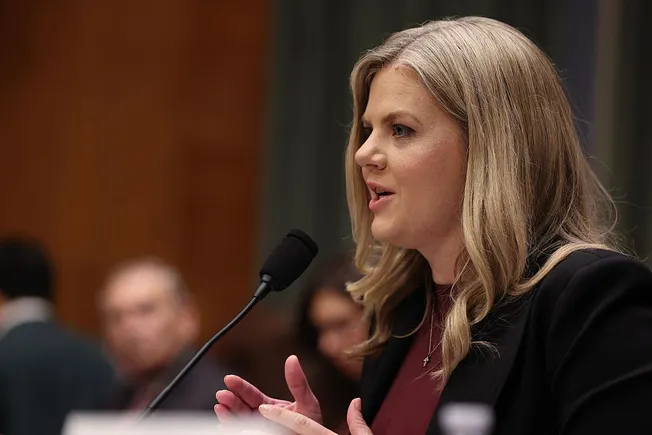
At her Senate confirmation hearing Thursday, FDA commissioner nominee Heidi Overton said she would 'follow the law' on vaccine and mifepristone policy if pressured by the White House. She affirmed the MMR vaccine is 'safe and effective' and acknowledged the FDA's determination that mifepristone meets safety and effectiveness standards, while declining to prejudge an ongoing review. Overton also pledged to advance reforms such as 'Operation Trialblazer' to accelerate early drug research and strengthen U.S. competitiveness against China's biotechnology industry. The hearing comes as the FDA seeks stability after a turbulent 18 months under former commissioner Martin Makary.
Roche and Ionis Pharmaceuticals reported that sefaxersen, an antisense oligonucleotide targeting complement factor B, succeeded in a Phase 3 trial for IgA nephropathy, significantly improving proteinuria. The companies plan to present full data at a medical meeting and share with regulators. If approved, sefaxersen would compete with existing therapies like Novartis' Fabhalta and other recently cleared drugs, offering the convenience of monthly self-injection. Analysts view the drug as a potential earnings driver for Roche and a much-needed win for Ionis.
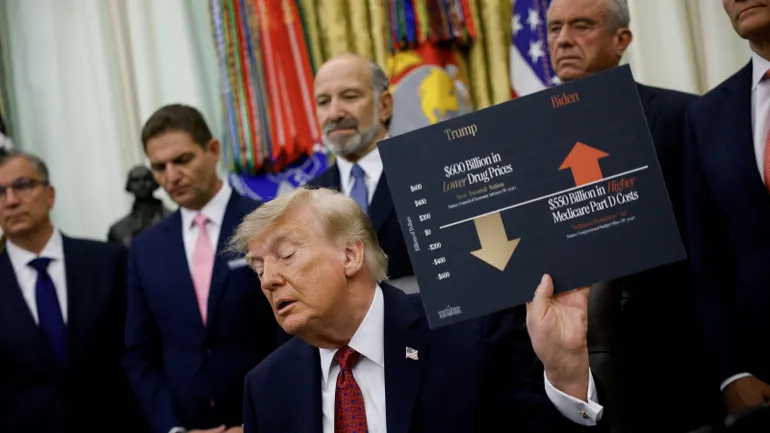
President Trump's most-favored-nation deals with 26 pharmaceutical companies are intended to lower drug prices, but a Mass General Brigham study estimates they could reduce projected Medicare savings by nearly 80%. The agreements may exempt drugmakers from two proposed Medicare payment models, GLOBE and GUARD, which were designed to save $11.6 billion annually. The study's lead author, Dr. Thomas Hwang, notes that exemptions based on companies' disclosures could eliminate a substantial portion of those savings. Additionally, the complexity of the U.S. healthcare system and limited availability of discounted drugs through TrumpRx may hinder patient savings.

Beacon Therapeutics' gene therapy laru-zova succeeded in a late-stage study of X-linked retinitis pigmentosa, helping a higher proportion of patients read at least 15 more letters on a low-light visual acuity test than untreated participants after one year. The company plans to begin a rolling approval application by year-end, with full data to be presented in October. The trial tested two doses in 85 male patients; 24% on low dose and 31% on high dose achieved the primary endpoint versus none in the control group. Two serious adverse events were attributed to the surgical procedure. Laru-zova is the first and only pivotal trial in XLRP to meet its main goal, according to Beacon.