


Latest news
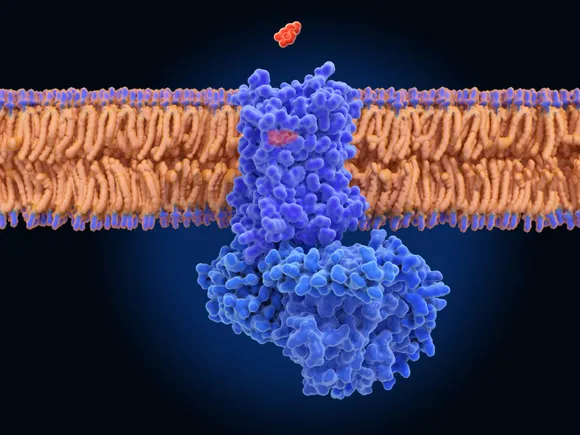
AI drug discovery company Superluminal Medicines announced the completion of an oversubscribed $60 million Series B financing round to advance its first candidate drug targeting rare genetic obesity into the clinic. The drug targets the MC4R receptor and is expected to enter human testing by the end of the year. The company plans to initially focus on Bardet-Biedl syndrome and hypothalamic obesity, with potential future expansion to Prader-Willi syndrome and general obesity.
GSK has agreed to pay Hutchmed $110 million upfront and potentially about $1.19 billion more in milestone payments and royalties for majority rights to HMPL-A830, an antibody-targeted therapeutic conjugate that links an EGFR-targeting antibody to a small-molecule KRAS blocker. Hutchmed reported synergistic anti-tumor activity and durable responses in preclinical testing. The therapy is slated to enter the clinic this year, with Hutchmed overseeing Phase 1 studies and GSK taking over global development outside mainland China, Hong Kong, Macau and Taiwan. The deal adds to GSK's growing oncology portfolio and extends its streak of partnerships with China-based biotechnology companies.
GlaxoSmithKline (GSK) announced a licensing agreement worth up to $1.3 billion with Hutchmed to acquire majority rights to the latter's investigational therapy HMPL-A830. This therapy is a novel antibody-targeted conjugate drug designed to target both EGFR and KRAS, with potential for use in treating multiple tumor types. Hutchmed will be responsible for Phase I clinical trials, after which GSK will lead global development (excluding mainland China, Hong Kong, Macau, and Taiwan).

Ultragenyx's stock nearly halved after its Phase III study of the Angelman syndrome candidate drug GTX-102 (apazunersen) failed to meet primary and secondary endpoints. The company plans to evaluate the drug program and seek significant cost reductions, focusing on marketed products, aiming for profitability by 2027.
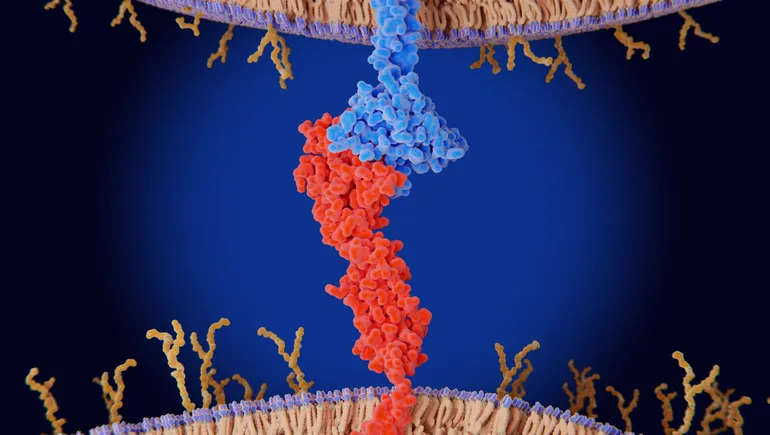
Akeso Biopharma and Summit Therapeutics announced on Thursday that their co-developed bispecific antibody, ivonescimab, met the key secondary endpoint of overall survival in an interim analysis of a Phase 3 clinical trial (HARMONi-2) in Chinese patients with non-small cell lung cancer. Results showed that patients treated with ivonescimab had significantly prolonged overall survival compared to those treated with Merck's pembrolizumab (Keytruda). Full data are expected to be presented at a lung cancer conference later this month. Although the trial results do not directly serve as the primary basis for a U.S. marketing application, they bolster industry confidence in positive outcomes from another global head-to-head trial.
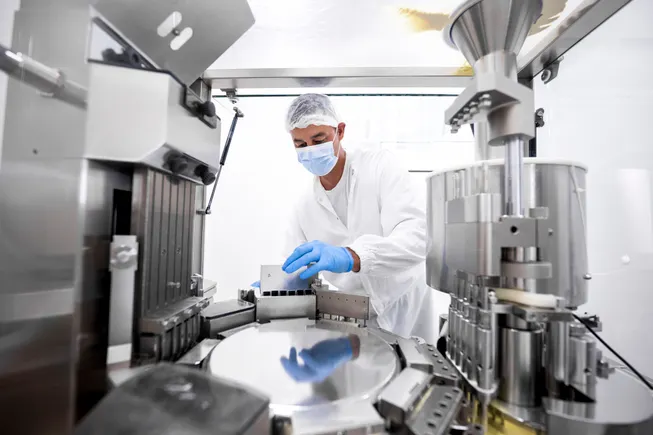
Carvykti's second-quarter net trade sales reached $657 million, up 50% year over year, but growth still depends on adding thousands of patient-specific manufacturing runs rather than producing larger batches. Industry experts explain that scaling autologous cell therapy requires coordinating patient cells, manufacturing slots, quality testing, logistics and treatment center schedules. Legend Biotech has expanded its manufacturing network to four sites and reports a 99% success rate and 29-day median turnaround time in the U.S. The FDA's 2025 removal of risk management requirements for some CAR-T therapies may ease downstream access, but upstream coordination remains critical. Developers are advised to address manufacturability early, and next-generation in vivo CAR-T approaches could shift much of the burden to standardized vectors.
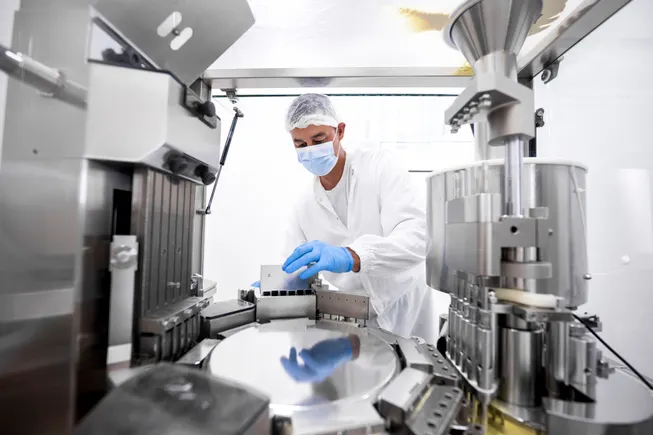
Autologous CAR-T therapy faces a unique "horizontal scaling" challenge in commercial expansion: each additional patient requires a new personalized production batch, rather than simply increasing batch size. The rapid growth of Carvykti from Legend Biotech and Johnson & Johnson highlights the highly coupled complexity of manufacturing, testing, logistics, and clinical scheduling. The industry is attempting to overcome this scaling bottleneck through automation, standardized processes, and new approaches such as in vivo CAR-T.

TSRL, Inc., a preclinical CRO based in Ann Arbor, Michigan, announced it has received its second-year Notice of Award from the NIH (Grant Number 5R44DK143799-03) to advance its microneedle patch delivering Trospium Chloride for overactive bladder. The nearly $1.1 million in continued funding supports preclinical development including pharmacokinetics, efficacy, safety, and formulation optimization. Principal Investigator Dr. Elke Lipka emphasized the importance of continued support amid funding uncertainties and the potential of the platform to improve patient adherence and tolerability.

On August 4, 2026, Toralgen announced that its proprietary polymeric ursodeoxycholic acid (pUDCA) nanoparticle platform achieved successful oral delivery of multiple diabetes/obesity peptide drugs, including mono-agonists, dual-agonists, and tri-agonists. Research conducted in collaboration with bioanalytical CRO Veloxity Labs showed that a single nanoparticle formulation can deliver multiple peptide drugs without requiring peptide-specific optimization. Preliminary studies of semaglutide demonstrated a relative bioavailability of approximately 7%, with oral exposure 5-10 times higher than the commercial SNAC formulation, and minimal food effects (<20%). These results were presented at the American Diabetes Association's 85th Scientific Sessions.
Schrödinger, Inc. (Nasdaq: SDGR) announced on August 5, 2026, a strategic agreement with Bristol Myers Squibb (BMS) to deploy its agentic AI co-scientist Bunsen within BMS research organizations. Building on the companies' long-standing collaboration, the agreement significantly expands the application of Schrödinger's computational platform, aiming to help BMS scientists explore more scientific possibilities, prioritize molecules with greater confidence, and accelerate discovery decisions.