


Latest news

At the European Society for Medical Oncology (ESMO) meeting, Moderna and Merck's individualized neoantigen therapy intismeran autogene met high expectations in melanoma but Moderna's shares fell double digits on commercial and broader-tumor doubts. Tango Therapeutics' vopimetostat combo showed strong response rates in pancreatic cancer, yet its stock dropped about 20% amid layoff news and competition concerns. Xencor's XmAb819 posted a 46% response rate in kidney cancer, making it a top Wall Street winner.

Eli Lilly beat revenue forecasts and raised guidance on strong Mounjaro and Zepbound sales, easing concerns about Medicare’s Bridge program and pricing pressure. Novartis rebounded from recent trial setbacks with third-quarter sales slightly above estimates and a raised 2026 outlook, though it recorded a $1.9 billion write-down from the Avidity deal. GSK reported 5% sales growth and reaffirmed its full-year outlook, but shares fell 5% amid vaccine declines and pipeline doubts, including slower-than-expected uptake of Exdensur and pending data for a longer-acting HIV preventive.

Two months after Actio Biosciences sold some assets to Jazz Pharmaceuticals for $1.3 billion, its team has launched Setara Biosciences with $90 million in financing. Setara aims to advance a drug for Charcot-Marie-Tooth disease and overactive bladder, along with discovery-stage programs in rare diseases, epilepsy, and migraines. The lead program, STAR-0871, an oral TRPV4 ion channel inhibitor, is preparing for a Phase 1b study in severe Charcot-Marie-Tooth by year-end and a Phase 2 study in overactive bladder. Actio alumni David Goldstein (CEO), David Breckenridge (CSO), and Cayce Denton (CFO) lead Setara, backed by investors including Deerfield Management, Canaan, and Jazz.

Aspen Neuroscience raised $140.6 million in its initial public offering, selling roughly 9.4 million shares at $15 each, the low end of its proposed range. The company's lead candidate, sasineprocel, is a one-time personalized cell therapy designed to replenish dopamine-producing neurons in Parkinson's disease patients. Early Phase 1/2a data suggest potential functional improvements and a favorable safety profile, with long-term data expected in 2028 and a Phase 3 trial planned by the end of next year. Aspen is one of several companies pursuing cell therapies for Parkinson's, including Bayer subsidiary BlueRock Therapeutics. The IPO adds to a growing number of biotech offerings in 2026, with 29 biotechs having gone public on U.S. exchanges so far this year.

The Department of Labor finalized a rule on Thursday requiring pharmacy benefit managers (PBMs) to disclose extensive compensation information to self-insured employer clients, including rebates and spread payments. Regulators expect the rule, effective July 2027, to lower drug costs by $22 billion over a decade. PBMs oppose the rule, arguing it is redundant with the Consolidated Appropriations Act of 2026 and burdensome, while employer groups support it as a transparency measure. The rule mandates disclosures during contract negotiations, renewals, and every six months, with annual audits allowed. Noncompliance could lead to financial penalties or contract invalidation. The rule targets the 'Big Three' PBMs that control about 80% of U.S. prescriptions.
Genmab's stock soared to a record high after its experimental drug petosemtamab, combined with Keytruda, succeeded in a late-stage trial for PD-L1-positive head and neck squamous cell carcinoma, halving the risk of death compared to Keytruda alone. The regimen met dual main objectives on response rates and survival. This marks the third consecutive positive late-stage readout for Genmab in recent weeks, boosting its growth prospects ahead of Darzalex's patent expiry. The company's market value increased by over $7 billion, surpassing $35 billion. Genmab will share detailed results with regulators and present them at a future medical meeting. Petosemtamab, acquired through the $8 billion buyout of Merus, is a bispecific antibody targeting EGFR and LGR5, and is also being tested in other Phase 3 trials, including in recurrent head and neck cancer and colorectal cancer.
Genmab's stock soared to a record high after its experimental drug petosemtamab, combined with Keytruda, succeeded in a late-stage trial for head and neck squamous cell carcinoma, cutting the risk of death by half compared to Keytruda alone. The regimen met dual main objectives on response rates and survival. This marks the third consecutive positive late-stage readout for Genmab in a few weeks, boosting the company ahead of Darzalex's patent expiry. Genmab's market value increased by more than $7 billion, surpassing $35 billion. Petosemtamab, a bispecific antibody targeting EGFR and LGR5, was acquired through the $8 billion buyout of Merus and is predicted to become a blockbuster by 2029.

Health and Human Services Secretary Robert F. Kennedy Jr. has adopted a new strategy to widen access to six unapproved peptides by announcing that HHS won't take enforcement action against state-licensed pharmacies, federal facilities, or licensed doctors that compound them. The move follows an FDA advisory panel's narrow recommendation in July to lift restrictions on KPV, TB-500, BPC-157, MOTS-c, Semax, and Epitalon, but FDA officials have concerns about potentially dangerous effects and won't support a regulation calling them safe. Critics, including Public Citizen and Americans for Safe & Effective Medicines, argue the policy undermines the FDA and poses public health risks, while HHS says it advances patient choice and provides a more controlled alternative to black and gray markets. The policy does not include emideltide, which the panel voted against. HHS is accepting comments for two weeks.
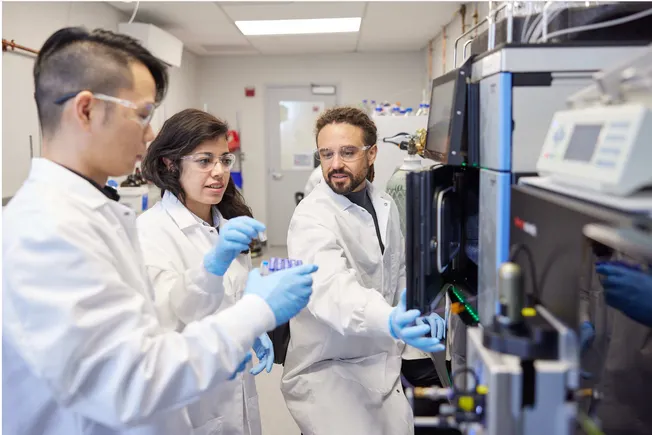
Flagship Pioneering has launched Etcelera, a new biotechnology company formed by merging three of its portfolio companies: Etiome, Cellarity, and Empress Therapeutics. Led by Adrian "Ad" Rawcliffe, former CEO of Adaptimmune, Etcelera aims to combine artificial intelligence with diverse drug discovery tools to better predict clinical success of experimental medicines. The company will leverage perturbation data and machine learning to identify novel disease drivers and develop small molecule drugs, initially targeting hematological conditions, immune diseases, and metabolic-fibrotic disorders. No new funding was announced, but the three predecessor companies had raised $374 million in venture capital. Etcelera retains a 2022 partnership with Novo and is pursuing another alliance with an unnamed large pharmaceutical firm. Flagship will move Cellarity's oral sickle cell disease drug into a separate standalone company.
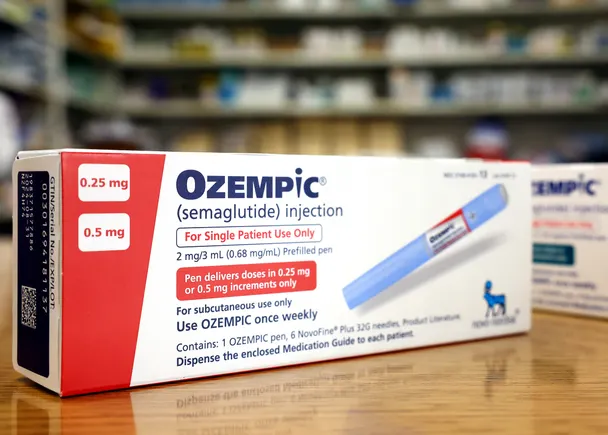
Eli Lilly’s triple-acting metabolic drug retatrutide outperformed Novo’s Ozempic in a head-to-head Phase 3 trial, achieving greater reductions in blood sugar and weight at the highest dose. After 80 weeks, the 12 mg dose lowered blood sugar by 2.2 percentage points versus 1.8 for Ozempic, and reduced weight by 21% compared to 9% for Ozempic. However, more retatrutide users discontinued treatment due to side effects (8% at the highest dose vs. 3% for Ozempic). Analysts see retatrutide as a potential differentiator for Lilly, with projected sales of $15 billion by 2032.