


Pharma

The May 2025 executive order on most-favored-nation pricing has led 14 of 17 large drugmakers to sign voluntary agreements, with participation reaching ~89% of the branded market. This shift, alongside the EU's Joint Clinical Assessment and stricter HTA evidence standards, is reshaping global commercialization. Cencora experts argue that traditional single-function scenario modeling is no longer viable; instead, integrated scenario modeling—incorporating policy, regulatory, market access, and other functions, and supported by AI—is essential for navigating complex trade-offs and ensuring timely patient access.

At the European Society for Medical Oncology (ESMO) meeting, Moderna and Merck's individualized neoantigen therapy intismeran autogene met high expectations in melanoma but Moderna's shares fell double digits on commercial and broader-tumor doubts. Tango Therapeutics' vopimetostat combo showed strong response rates in pancreatic cancer, yet its stock dropped about 20% amid layoff news and competition concerns. Xencor's XmAb819 posted a 46% response rate in kidney cancer, making it a top Wall Street winner.

Eli Lilly beat revenue forecasts and raised guidance on strong Mounjaro and Zepbound sales, easing concerns about Medicare’s Bridge program and pricing pressure. Novartis rebounded from recent trial setbacks with third-quarter sales slightly above estimates and a raised 2026 outlook, though it recorded a $1.9 billion write-down from the Avidity deal. GSK reported 5% sales growth and reaffirmed its full-year outlook, but shares fell 5% amid vaccine declines and pipeline doubts, including slower-than-expected uptake of Exdensur and pending data for a longer-acting HIV preventive.
Genmab's stock soared to a record high after its experimental drug petosemtamab, combined with Keytruda, succeeded in a late-stage trial for PD-L1-positive head and neck squamous cell carcinoma, halving the risk of death compared to Keytruda alone. The regimen met dual main objectives on response rates and survival. This marks the third consecutive positive late-stage readout for Genmab in recent weeks, boosting its growth prospects ahead of Darzalex's patent expiry. The company's market value increased by over $7 billion, surpassing $35 billion. Genmab will share detailed results with regulators and present them at a future medical meeting. Petosemtamab, acquired through the $8 billion buyout of Merus, is a bispecific antibody targeting EGFR and LGR5, and is also being tested in other Phase 3 trials, including in recurrent head and neck cancer and colorectal cancer.
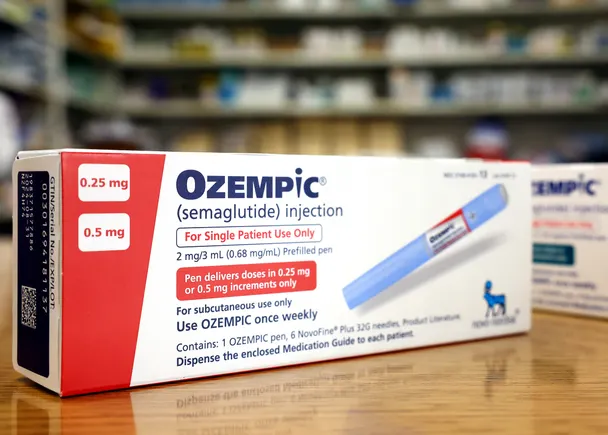
Eli Lilly’s triple-acting metabolic drug retatrutide outperformed Novo’s Ozempic in a head-to-head Phase 3 trial, achieving greater reductions in blood sugar and weight at the highest dose. After 80 weeks, the 12 mg dose lowered blood sugar by 2.2 percentage points versus 1.8 for Ozempic, and reduced weight by 21% compared to 9% for Ozempic. However, more retatrutide users discontinued treatment due to side effects (8% at the highest dose vs. 3% for Ozempic). Analysts see retatrutide as a potential differentiator for Lilly, with projected sales of $15 billion by 2032.

Eli Lilly will combine its U.S. and international divisions into Lilly Global Markets, led by Ilya Yuffa, as Patrik Jonsson retires at the end of 2026. Novartis reported a $1.9 billion impairment charge related to del-desiran, an experimental drug acquired in its $12 billion Avidity Biosciences buyout, after a late-stage trial failure. Astellas obtained an option to license Audax Biosciences' DAX-044 for up to $1.05 billion in milestones. The FDA expanded approval of Pfizer's Talzenna with Xtandi for earlier use in metastatic prostate cancer. Prana Therapeutics will go public through a reverse merger with Bolt Biotherapeutics, backed by a $120 million private financing.
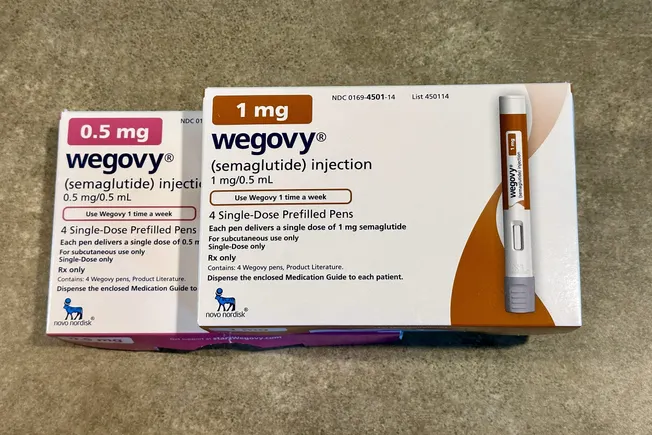
A federal judge denied Novo's motion to block Eli Lilly's advertising campaign comparing obesity drugs Wegovy and Zepbound. Novo argued the ads used outdated studies and caused irreparable harm, but the judge found no decline in Wegovy prescriptions during the campaign and noted the ads acknowledged higher-dose Wegovy. The ruling is not a final resolution of Novo's false advertising claims, according to a Novo spokesperson. The decision comes amid an intense commercial battle between the two companies in a market expected to exceed $100 billion by 2030.
BioNTech and DualityBio announced that their antibody-drug conjugate trastuzumab pamirtecan met its primary goal in a Phase 3 study in HER2-low breast cancer, delaying tumor progression. However, the improvement was 'modest,' and the treatment was linked to higher rates of interstitial lung disease and severe or fatal events in a small proportion of patients. The trial was not long enough to show a clear survival benefit. Given the current treatment landscape, the companies suggest the potential benefit to patients would be limited and will discuss next steps. Trastuzumab pamirtecan is also being tested in endometrial cancer and advanced solid tumors. BioNTech obtained the drug through a 2023 licensing deal with DualityBio worth potentially over $1.6 billion.

In this article, Ron Scarboro, CEO of Azurity Pharmaceuticals, explains that while the pharmaceutical industry focuses on discovering new molecules, there is another source of innovation and value in established medicines whose potential may have been limited by yesterday's market. He illustrates this with the history of naltrexone HCl/bupropion HCl, an oral anti-obesity medication approved in 2014 that became the most-prescribed branded anti-obesity medication by mid-2015 but whose manufacturer filed for Chapter 11 three years later. Scarboro argues that the market context for obesity treatment has since been transformed by GLP-1s, which changed the conversation around obesity, increased patient awareness, and normalized treatment. Azurity acquired naltrexone HCl/bupropion HCl in June, based on a disciplined view of how the market has changed and how its capabilities can create value. He emphasizes the importance of understanding why an asset underperformed and having a repeatable model to recognize and act on value that others may not see. Innovation, he concludes, isn't only about seeing what comes next but also about looking differently at what is already there.
Innovation in protein-based molecules is driving the development of novel therapeutics such as antibody-drug conjugates (ADCs), multispecific antibodies, antibody fragments, and recombinant and synthetic peptides. These next-generation molecules offer improved efficacy, enhanced selectivity, and lower toxicity but pose complex manufacturing challenges. ADCs, a rapidly expanding oncology category, require high-potency handling and single-use technologies to ensure safety and reduce cross-contamination. Bispecific and multispecific antibodies, which can bind multiple antigens, show potential in oncology and other diseases, necessitating advanced purification solutions. The article discusses these challenges and solutions, referencing relevant studies and resources.