


Pharma

BioPharma Dive's latest chart series highlights the resurgence of RNA interference (RNAi) drug developers. After more than a decade of little interest, the sector is experiencing an IPO boom, with ADARx Pharmaceuticals and City Therapeutics recently listing on the Nasdaq. ADARx raised $446 million in September, the first RNAi IPO since 2014, while City raised $100 million in a Series B round before its IPO. Venture capital has also flowed to five RNAi startups this year, including AusperBio Therapeutics with a $120 million Series C. Big pharma is placing larger bets as well: Merck KGaA agreed to acquire Silence Therapeutics for over $1 billion, a 130% premium over its closing price, the second-highest premium among larger biopharma deals this year. Analysts see the deal as locking in value and removing execution risk for Silence shareholders.
Compounding pharmacy Apothecary Pharma has issued a voluntary recall of its copycat version of Eli Lilly's obesity drug Zepbound, covering 22 lots of compounded tirzepatide with beyond-use dates from Oct. 8 to Nov. 26. The recall, classified as Class II by the FDA, comes amid efforts by Lilly and Novo to stop sales of compounded GLP-1 counterparts. The FDA has warned about compounded versions, and a recent Gallup survey found about 20% of Americans using these medicines take compounded forms.
Roche on Thursday reaffirmed its full-year outlook and reported third-quarter group sales of 16.1 billion Swiss francs, up 7% and above the 15.8 billion franc consensus. Jefferies analyst Michael Leuchten noted the beat was aided by a new resource planning system and said underlying numbers would seem to be a miss. He added that the results and unchanged guidance raise questions about growth into 2027. Roche is facing threats to top-selling drugs including Xolair, Ocrevus, Tecentriq and Hemlibra, and is betting on pipeline assets such as giredestrant and obesity drugs, while also expanding in China through licensing deals.
The FDA approved Hibsago, a first-of-its-kind RNA-based medicine from GSK and Ionis for certain adults with chronic hepatitis B. In late-stage trials, about a fifth of patients achieved a functional cure when Hibsago was combined with antivirals, compared to none on placebo. The drug requires periodic injections over six months and carries a safety warning for liver inflammation and low platelet counts. GSK has not disclosed the list price, and the drug is already approved in Japan with reviews ongoing in China and Europe.

The article examines three oncology strategies attracting major pharma investment—PD-(L)1/VEGF bispecifics, B7-H3 antibody-drug conjugates, and in vivo CAR-T—and assesses the strength of clinical evidence for each. PD-(L)1/VEGF has strong but mixed data, including a phase 3 win for ivonescimab in China and a narrowly missed overall survival endpoint in a global trial. B7-H3 ADCs have two phase 3 survival wins in China, but shared payloads and limited geography leave questions. In vivo CAR-T has striking early data in just six patients, far behind the scale of deal-making. Experts caution that deals reflect price, not proof, and that the central question is what each approach has actually demonstrated in patients.
Merck KGaA announced a $1.3 billion buyout of Silence Therapeutics, paying $20 per U.S.-listed share—a 130% premium—to acquire divesiran, an RNAi therapy that delivered positive Phase 2 data in polycythemia vera. Key shareholders holding 14% of voting power have agreed to the deal, expected to close in Q1 2027. Divesiran, which silences TMPRSS6 to raise hepcidin levels, could compete with Takeda and Protagonist Therapeutics' Mimrylo and older treatments like Jakafi. Analysts from Cantor Fitzgerald suggest divesiran may be best-in-class and could require fewer patients in Phase 3 than Mimrylo's trial. Merck KGaA CEO Kai Beckmann framed the deal as part of transforming the pipeline toward high-specialization areas, following last year's Springworks Therapeutics acquisition.

Bringing a therapy to clinic requires parallel clinical, nonclinical, regulatory, and CMC activities. While engaging a CDMO early can help teams understand technical requirements and timelines, committing to CMC decisions before supporting evidence is available can result in rework. A case study illustrates how an early formulation decision based on a preliminary target product profile had to be repeated after nonclinical studies showed a simpler approach was viable, delaying IND filing and trial start. The key is to engage early but keep certain decisions flexible, advancing drug substance development and fit-for-purpose clinical supply while allowing emerging data to inform later choices. The goal is to optimize the overall development plan, not CMC in isolation, through ongoing cross-functional communication.
On September 3, AbbVie announced that its bispecific antibody etentamig met the primary endpoint in the Phase III CERVINO trial for relapsed/refractory multiple myeloma, significantly extending patients' progression-free survival. Safety data showed that etentamig had lower rates of severe immune-related adverse events compared to similar marketed drugs, which may support its broader use in community oncology centers. Although the drug is launching four years later than J&J's Tecvayli, its differentiated safety profile could help it secure a position in the highly competitive market.
GlaxoSmithKline (GSK) announced a licensing agreement worth up to $1.3 billion with Hutchmed to acquire majority rights to the latter's investigational therapy HMPL-A830. This therapy is a novel antibody-targeted conjugate drug designed to target both EGFR and KRAS, with potential for use in treating multiple tumor types. Hutchmed will be responsible for Phase I clinical trials, after which GSK will lead global development (excluding mainland China, Hong Kong, Macau, and Taiwan).
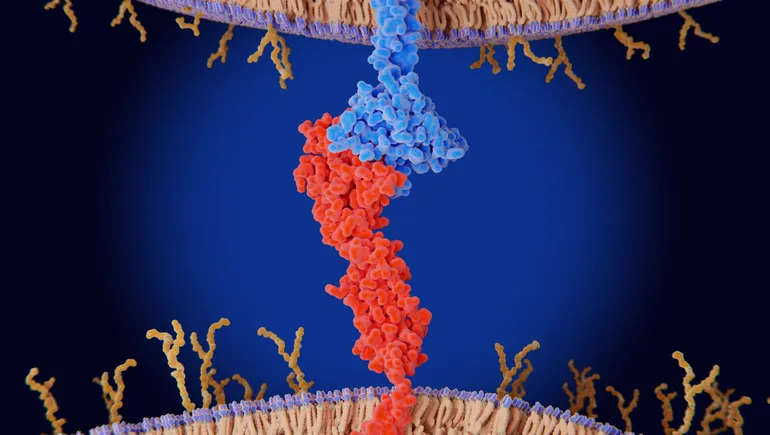
Akeso Biopharma and Summit Therapeutics announced on Thursday that their co-developed bispecific antibody, ivonescimab, met the key secondary endpoint of overall survival in an interim analysis of a Phase 3 clinical trial (HARMONi-2) in Chinese patients with non-small cell lung cancer. Results showed that patients treated with ivonescimab had significantly prolonged overall survival compared to those treated with Merck's pembrolizumab (Keytruda). Full data are expected to be presented at a lung cancer conference later this month. Although the trial results do not directly serve as the primary basis for a U.S. marketing application, they bolster industry confidence in positive outcomes from another global head-to-head trial.