


FDA
Biohaven's stock dropped more than 10% Thursday after the company disclosed that the FDA has placed a partial hold on its experimental epilepsy drug opakalim. The agency requested additional data on a metabolite identified in rodent studies and instructed Biohaven to pause recruitment in the ongoing Phase 3 RISE-2 trial, though dosing continues for existing participants. The hold does not affect the fully enrolled RISE-3 trial, which is expected to produce results later this year. Biohaven recently licensed opakalim to SK Biopharmaceuticals in a deal worth up to $795 million, receiving an immediate $350 million payout. Analysts note the hold may delay a readout necessary for approval and adds risk, but SK was aware of the data before the deal.
The Trump administration has installed permanent leaders at the FDA's Center for Drug Evaluation and Research (CDER) and Center for Biologics Evaluation and Research (CBER). Michael Davis, formerly acting director of CDER, and Karim Mikhail, who led CBER on an interim basis, will take on the roles permanently. The administration also created a new position for Jared Seehafer as the first deputy commissioner for technology and artificial intelligence, and named Bret Koplow as director of the Center for Tobacco Products. The appointments follow a period of turbulence at the FDA, including the resignation of Commissioner Marty Makary and turnover in key positions. Analysts see the permanent appointments as a sign of continuity and stability that may ease concerns about major policy shifts.
AbbVie announced that its dual-acting bispecific antibody etentamig met the main goal of a Phase 3 trial in multiple myeloma, reducing the risk of progression or death by 60% versus standard therapies. The drug also demonstrated a favorable safety profile, with low rates of cytokine release syndrome and ICANS, potentially allowing broader use in community oncology settings. AbbVie plans to discuss results with regulators and present data at the International Myeloma Society Annual Meeting.
The U.S. FDA has approved Mimrylo (rusfertide), a first-in-class drug developed in collaboration between Takeda Pharmaceutical and Protagonist Therapeutics, for the treatment of erythrocytosis in adult patients with polycythemia vera. The drug mimics hepcidin activity to reduce red blood cell production, and a Phase III trial showed that 77% of patients did not require phlebotomy. Mimrylo is priced at $4,200 per vial, and its label does not restrict prior treatments; analysts expect peak annual sales to reach $2 billion.
The FDA has approved Mimrylo (rusfertide), developed by Takeda and Protagonist Therapeutics, for polycythemia vera, a rare blood cancer characterized by excess blood cells. Mimrylo is the first medicine of its kind, mimicking hepcidin to control iron levels and reduce red blood cell production. It is specifically cleared for erythrocytosis in adults and has a list price of $4,200 per vial. The approval includes a broader-than-expected label that does not require prior treatment with other drugs. In Phase 3 testing, about 77% of participants receiving Mimrylo did not need phlebotomies over 32 weeks, compared to 32.9% on placebo. Common adverse events included injection site reactions and anemia. Protagonist, which discovered the drug, licensed it to Takeda in 2024 for $300 million and will receive $275 million in payouts related to the approval, with eligibility for up to $875 million more plus royalties. The approval follows the recent clearance of Takeda's narcolepsy drug Orzeyful and precedes the expected approval of autoimmune treatment zasocitinib.
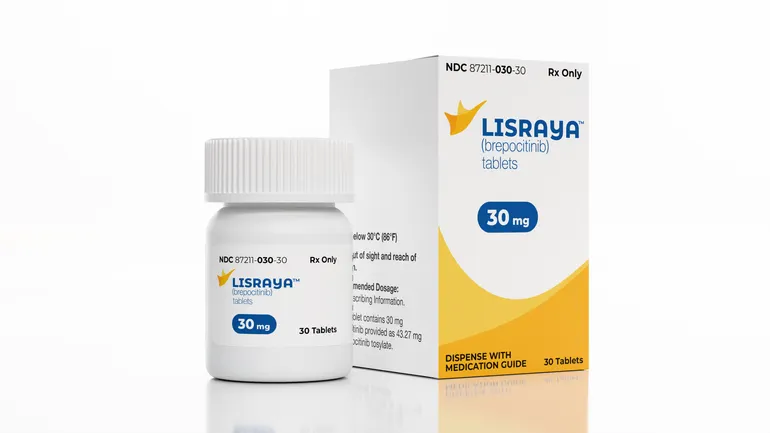
The U.S. FDA on Thursday approved the first oral drug brepocitinib (brand name Lisraya) for the treatment of dermatomyositis, a rare and debilitating skin disease. The drug was initially discovered by Pfizer and licensed to Priovant Therapeutics, a subsidiary of Roivant Sciences. The list price for a 30-day course is $35,000.
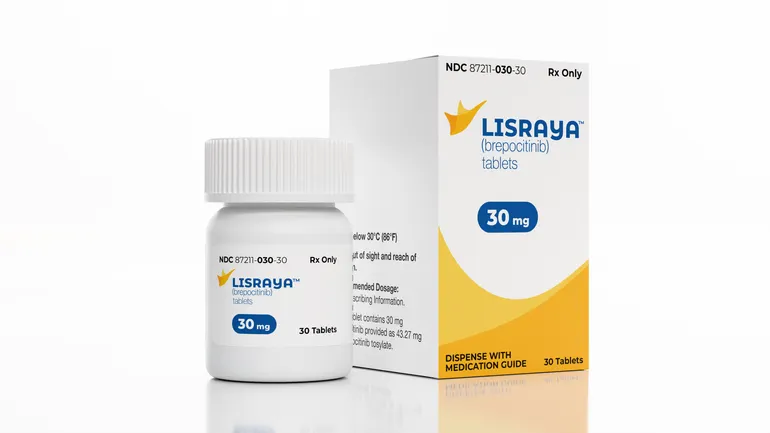
The FDA approved Lisraya (brepocitinib) for dermatomyositis, the first oral therapy for the rare condition. Developed by Priovant Therapeutics and originally discovered by Pfizer, the drug targets TYK2 and JAK1. A 30-day supply is priced at $35,000. In Phase 3 trials, Lisraya improved muscle strength and skin symptoms and reduced steroid use, with a safety profile consistent with other JAK inhibitors. Dermatomyositis affects about 34,000 people in the U.S.

The FDA has expanded approval of Jazz Pharmaceuticals' Ziihera for frontline use in HER2-positive gastrointestinal cancers, a setting where it reduced progression or death risk by 35% versus Herceptin and chemo in a Phase 3 trial. RBC analyst Leonid Timashev sees a market opportunity north of $1.5 billion with relatively quick uptake, while Stifel's Annabel Samimy notes roughly 12,000 eligible U.S. patients, far more than the 1,500 with biliary tract cancer. The broad label includes lower HER2 expression and tumors in the esophagus and gastroesophageal junction. Jazz acquired most rights from Zymeworks in 2022; Zymeworks earned a $250 million payment for the approval and stands to receive up to $1.3 billion in milestones plus royalties. Ziihera's revenue could climb further if breast cancer trials, with initial data expected in late 2027, are successful.

U.S. President Trump signed an executive order on Monday named the "Golden Standard Childhood Vaccine Recommendations," attempting to make major changes to the U.S. childhood immunization program that has been in place for decades. The order plans to reduce the number of universally recommended vaccines from 17 to 11 and requires the measles-mumps-rubella (MMR) vaccine to be split into three separate injections. This move has been criticized by professional organizations such as the American College of Physicians for bypassing existing scientific review procedures. Additionally, the legal effect and scope of implementation of the executive order remain unclear, as vaccine mandate policies are primarily determined by individual states.
The U.S. FDA approved Replimune's advanced melanoma therapy Tudriqev (formerly RP1) on Thursday, after two prior rejections. This is an accelerated approval requiring a subsequent Phase III trial to confirm efficacy. Data showed tumor responses in about a quarter of patients, with a median duration exceeding 14 months.