


Clinical Trials
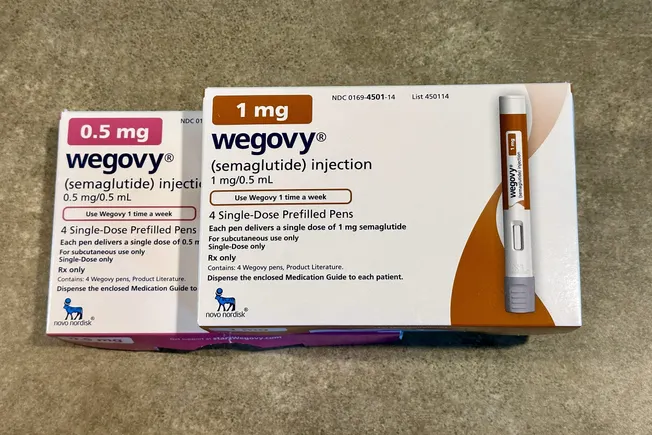
A federal judge denied Novo's motion to block Eli Lilly's advertising campaign comparing obesity drugs Wegovy and Zepbound. Novo argued the ads used outdated studies and caused irreparable harm, but the judge found no decline in Wegovy prescriptions during the campaign and noted the ads acknowledged higher-dose Wegovy. The ruling is not a final resolution of Novo's false advertising claims, according to a Novo spokesperson. The decision comes amid an intense commercial battle between the two companies in a market expected to exceed $100 billion by 2030.
BioNTech and DualityBio announced that their antibody-drug conjugate trastuzumab pamirtecan met its primary goal in a Phase 3 study in HER2-low breast cancer, delaying tumor progression. However, the improvement was 'modest,' and the treatment was linked to higher rates of interstitial lung disease and severe or fatal events in a small proportion of patients. The trial was not long enough to show a clear survival benefit. Given the current treatment landscape, the companies suggest the potential benefit to patients would be limited and will discuss next steps. Trastuzumab pamirtecan is also being tested in endometrial cancer and advanced solid tumors. BioNTech obtained the drug through a 2023 licensing deal with DualityBio worth potentially over $1.6 billion.

BioPharma Dive summarizes three notable storylines from the European Society for Medical Oncology (ESMO) annual meeting. Moderna and Merck's personalized cancer vaccine intismeran autogene reduced recurrence or death risk by 42% in melanoma, but investor skepticism persists over its broader applicability and manufacturing. Roche's divarasib cut the risk of death or disease progression by 42% and death by 44% in KRAS G12C non-small cell lung cancer, outperforming Krazati and Lumakras, prompting Roche to raise peak sales estimates to 3 billion Swiss francs. Amgen's Imdelltra combined with Imfinzi reduced the risk of death by 58% versus Imfinzi alone in extensive-stage small cell lung cancer, with median overall survival of 21.1 months versus 12.7 months, potentially expanding its market opportunity to $9.6 billion.
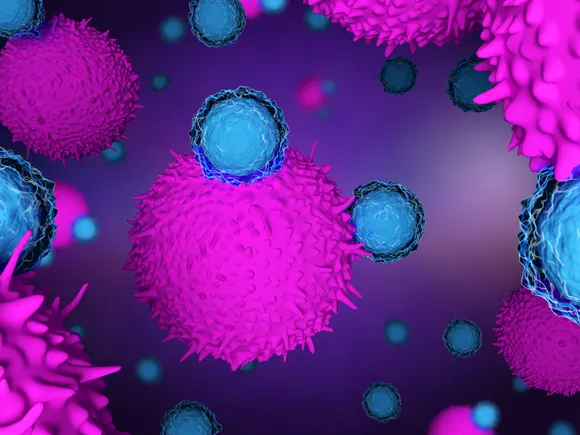
Moderna and Merck's individualized neoantigen therapy intismeran autogene, combined with Keytruda, reduced the relative risk of disease recurrence or death by 42% compared to Keytruda alone in a late-stage melanoma trial. The results, presented at ESMO after being leaked on social media, met the trial's primary goal but fell short of the 44% reduction seen in an earlier Phase 2 trial and the 40-50% range expected by Wall Street. Moderna's stock fell nearly 25% and Merck's around 1%, though some analysts defended the data as practice-changing. The companies are testing the approach in lung, bladder, and kidney cancers.

Roivant subsidiary Priovant Therapeutics will seek regulatory approval for a new indication for brepocitinib in non-infectious uveitis after the drug succeeded in two Phase 3 studies, Clarity-1 and Clarity-2. Patients on brepocitinib went a median of more than 48 weeks before treatment failure versus 12 weeks for placebo, and 40 weeks without needing immunosuppressive steroids. The drug also met all secondary endpoints, including resolving macular edema. Priovant already has FDA approval for brepocitinib as Lisraya in dermatomyositis and plans to submit a supplemental application in the first half of next year. The results mark another win for Roivant, which partnered with Pfizer in 2022 to create Priovant. Analysts see potential peak sales of $5 billion for brepocitinib in non-infectious uveitis.

Rapport Therapeutics’ RAP-219 narrowly succeeded in a mid-stage study of bipolar mania, with patients showing a 3.1-point greater improvement than placebo on a clinical scale. The drug was well-tolerated, with mostly mild to moderate adverse events. Analysts called the result unexpected and potentially worth over $1 billion in peak sales. Rapport plans to discuss the results with the FDA in early 2025 and initiate two Phase 3 trials in the second half of 2027. The drug, which dampens glutamate signaling, previously showed promise in focal onset seizures and is also being explored for other CNS indications.

The article examines three oncology strategies attracting major pharma investment—PD-(L)1/VEGF bispecifics, B7-H3 antibody-drug conjugates, and in vivo CAR-T—and assesses the strength of clinical evidence for each. PD-(L)1/VEGF has strong but mixed data, including a phase 3 win for ivonescimab in China and a narrowly missed overall survival endpoint in a global trial. B7-H3 ADCs have two phase 3 survival wins in China, but shared payloads and limited geography leave questions. In vivo CAR-T has striking early data in just six patients, far behind the scale of deal-making. Experts caution that deals reflect price, not proof, and that the central question is what each approach has actually demonstrated in patients.

Disc Medicine's bitopertin succeeded in a Phase 3 trial for erythropoietic porphyria (EPP), meeting all primary and secondary endpoints. The drug reduced PPIX levels by about 46% versus 4% for placebo and increased pain-free light exposure by 12.2 hours. Disc plans to resubmit an FDA application by the end of the year, with a possible launch in 2027. The positive results follow a prior FDA rejection and could lead to the company's first drug approval.

Arrowhead Pharmaceuticals reported that its experimental RNA interference drug ARO-MAPT lowered levels of the Alzheimer’s-linked protein tau by an average of 73% after 105 days at the highest dose in an early-stage trial in healthy volunteers. The results, which showed reductions of up to 85% and mild side effects, also provide clinical validation for a delivery platform that targets cells outside the liver, including the central nervous system. While the findings hint at potential benefit in Alzheimer’s, substantial further work is needed to demonstrate an impact on the disease, and tau remains an unproven target.
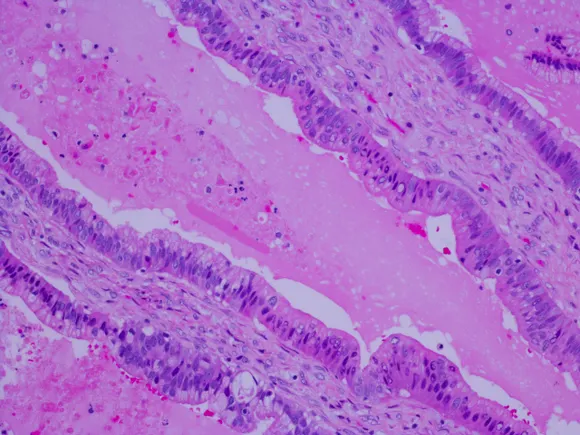
Verastem Oncology shares rose 18% after early data showed its KRAS G12D inhibitor VS-7375 produced response rates of 36-50% in pancreatic cancer, 33% in colorectal cancer, and 43% in non-small cell lung cancer. The company plans three late-stage trials by mid-2025 and announced a $250 million stock offering and CEO transition. VS-7375 targets both active and inactive forms of the mutation and will face competition from Revolution Medicines and others.