


Latest news

The FDA on Wednesday announced the 'Rare Disease Framework Initiative,' which aims to review existing policies and create a 'fit-for-purpose framework' for drug development and regulation of rare disease therapies. The agency will seek input from patients and experts, with a public meeting scheduled for Oct. 28 and initial recommendations targeted for February, according to Bloomberg News. The initiative continues an ongoing 'reset' at the FDA and may reduce uncertainty for drug developers, though the agency still lacks a permanent leader. About 30 million Americans live with a rare disease, but only 5% of recognized rare conditions had an approved treatment as of last year.

Arrowhead Pharmaceuticals reported that its experimental RNA interference drug ARO-MAPT lowered levels of the Alzheimer’s-linked protein tau by an average of 73% after 105 days at the highest dose in an early-stage trial in healthy volunteers. The results, which showed reductions of up to 85% and mild side effects, also provide clinical validation for a delivery platform that targets cells outside the liver, including the central nervous system. While the findings hint at potential benefit in Alzheimer’s, substantial further work is needed to demonstrate an impact on the disease, and tau remains an unproven target.
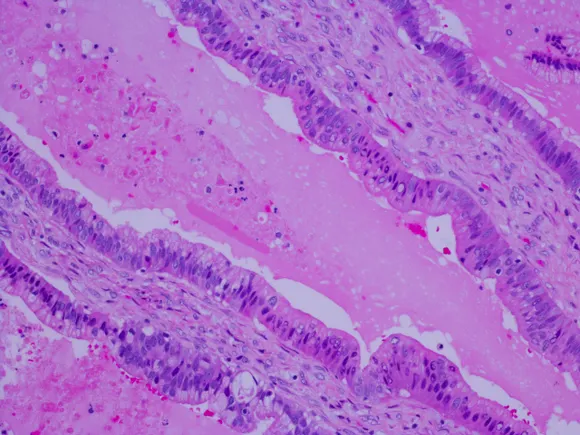
Verastem Oncology shares rose 18% after early data showed its KRAS G12D inhibitor VS-7375 produced response rates of 36-50% in pancreatic cancer, 33% in colorectal cancer, and 43% in non-small cell lung cancer. The company plans three late-stage trials by mid-2025 and announced a $250 million stock offering and CEO transition. VS-7375 targets both active and inactive forms of the mutation and will face competition from Revolution Medicines and others.

Velaris Therapeutics, a Paragon Labs spinout focused on heart and lung diseases, has gone public through a reverse merger with Alaunos Therapeutics. The deal, which includes a $350 million private stock offering led by Fairmount Funds, will fund Velaris' research into 2029. The combined company will prioritize Velaris' drug programs, with four of five board directors from or picked by Fairmount. This is the ninth Paragon spinout and the latest in a wave of biotech reverse mergers, which have surged to more than two dozen in 2026 compared to 10 in all of 2025.
BioNTech announced that its experimental mRNA cancer immunotherapy BNT 113, combined with Keytruda, did not meet the primary endpoint of progression-free survival in a late-stage study for head and neck squamous cell carcinoma driven by high-risk HPV. The data monitoring committee recommended continuing the trial to evaluate overall survival, the study's other main objective. The company's shares fell about 6% in early trading. This setback follows other mixed results from BioNTech's oncology pivot, including a colorectal cancer study failure earlier this year.
Roche has signed its fifth deal with a China-based drugmaker since August, agreeing to pay Rona Therapeutics $100 million upfront for full rights to an RNA interference obesity drug targeting ALK7. The deal includes up to $1 billion in development, regulatory, and commercial milestones, plus sales royalties. The drug joins Roche's pipeline of obesity medicines as the company seeks to compete in a market dominated by Eli Lilly and Novo Nordisk. Rona launched in 2022 with backing from Lilly Asia Ventures and licensed RNA technology from Sanofi.

First Tracks Biotherapeutics reported that its experimental drug ANB033 produced statistically significant improvements in celiac disease signs and symptoms compared to placebo in a six-week early-stage trial. The drug, which blocks CD122, also prevented symptom increases during a gluten challenge and showed no serious adverse events. The company plans to report data from a second cohort in Q1 next year and start a late-stage trial in 2027. Analysts view the results as impressive and comparable to Teva's recent data, with potential across multiple autoimmune diseases.

Aspen Neuroscience has filed to go public on the Nasdaq under the ticker “ASPE,” potentially becoming the first U.S. company focused on a Parkinson’s-specific cell therapy to list. Founded in 2018, Aspen uses a patient’s own cells, reprogrammed into dopamine-producing neurons, to treat Parkinson’s disease. Its lead therapy, sasineprocel (ANPD001), has completed an early-stage trial and is entering late-stage testing. The company has raised approximately $347 million since inception. In its Oct. 9 registration documents, Aspen reported a net loss of $62 million in 2025 and almost $37 million in the first six months of this year, with R&D accounting for over 70% of operating expenses. Aspen also disclosed substantial doubt about its ability to continue as a going concern without additional capital. The filing comes amid a more open IPO window for biotech, with two dozen biotechs having gone public so far in 2026.

Bristol Myers Squibb reported that its experimental IPF drug admilparant met its primary endpoint in a Phase 3 trial at the 60 mg dose, significantly slowing forced vital capacity decline versus placebo over one year. However, the 120 mg dose did not achieve statistical significance, prompting analyst concerns about the lack of dose response. The company said the drug was well tolerated. Admilparant is the most advanced LPA1 receptor antagonist, a class with a history of safety and efficacy setbacks. Bristol Myers shares initially rose 6% pre-market but closed down about 4%. Contineum Therapeutics, which has a competing LPA1 drug, saw its stock fall 30%. Separately, Bristol Myers reported success in a late-stage study of radiopharmaceutical RYZ-101 for neuroendocrine tumors, acquired via the $4.1 billion RayzeBio buyout.

Bristol Myers Squibb reported that its experimental IPF drug admilparant met its primary endpoint in a Phase 3 trial, significantly slowing breathing capacity decline at a 60 mg dose compared to placebo. However, the 120 mg dose did not achieve statistical significance, prompting analyst concerns about the lack of dose response. The company said the drug was well tolerated. Bristol Myers shares reversed early gains to close down about 4%. Admilparant is the most advanced LPA1 receptor antagonist, a class with a history of safety and efficacy setbacks. Analysts remain divided on the drug's prospects, with some seeing a blockbuster opportunity and others awaiting detailed data.