


Latest news

Evaluate forecasting data shows more than $500 billion in worldwide prescription drug sales could face generic competition between 2026 and 2032, with the risk building in waves rather than a single cliff. Merck is most exposed near term as Keytruda nears 2028 expiry, while AbbVie's risk rises sharply in the early 2030s when Rinvoq and Skyrizi lose protection. J&J, Sanofi and AstraZeneca also face significant pressure. The data reveals a multiyear buildup, with $99 billion at risk in 2028 and a peak of $158 billion in 2031. Drugmakers are responding with heavy dealmaking: since 2024, Merck announced $30.9 billion across six deals, Lilly $27.2 billion, AbbVie $22.3 billion, J&J $20.4 billion, Sanofi $16.1 billion and AstraZeneca $6.8 billion.

The Department of Health and Human Services has unveiled a broad plan to strengthen surveillance of vaccine-related injuries, including enhanced monitoring systems and a new clinic at the National Institutes of Health to study health problems following immunization. Led by HHS Secretary Robert F. Kennedy Jr., the initiatives aim to improve how the federal government identifies, documents, investigates, and responds to reported health problems after vaccination. The plan includes reimbursing doctors for reporting suspected side effects to VAERS, updating VAERS for accessibility, and requiring electronic health records to capture vaccine-related adverse events. Kennedy stated the goal is to listen to patients and make vaccines safer. However, experts like Paul Offit and Kawsar Talaat expressed skepticism, warning the moves could undermine vaccine confidence rather than improve it. HHS did not provide additional comment.
Viatris announced Thursday it will acquire Pacira BioSciences for $1.65 billion, paying $36.50 per share in cash—a 45% premium over Wednesday's closing price. The deal, expected to close by the end of 2026, adds Pacira's post-surgical pain drug Exparel and osteoarthritis knee pain therapy Zilretta, which together booked $692 million in 2025 sales, growing about 4% over 2024. Viatris plans to leverage its global infrastructure to expand the products' reach. The acquisition fits Viatris' strategy of purchasing on-market commercial assets and is expected to be immediately accretive to revenue and earnings into the 2030s, according to Leerink analyst Daniel Clark. However, Exparel faces generic erosion starting in early 2030 due to patent settlements with Fresenius Kabi and a Hengrui Pharma subsidiary, while Zilretta's patents expire in 2031. Viatris says it will use its intellectual property expertise to extend product lifecycles and sustain sales after generics arrive.

Argenx shares fell 15% Thursday after an independent monitoring board recommended ending a Phase 3 study of Vyvgart in Sjögren’s disease for futility, surprising analysts who expected results in 2027. The failure removes a potential $1.4 billion peak sales opportunity for the Vyvgart franchise. A separate announcement of successful Phase 2 research for a new celiac disease drug, FB102, failed to reassure investors. Analysts noted the Sjögren’s setback was high-risk and not included in models, but success would have brought significant upside. Argenx, valued at around $50 billion, continues to expand Vyvgart, which is approved for myasthenia gravis and CIDP, with peak sales estimates of $11-17 billion. The company also acquired FB102 through a $2.2 billion takeover of Forte Biosciences, with Phase 2 data showing prevention of gluten-induced intestinal damage.

Caribou Biosciences, a CRISPR gene editing startup co-founded by Jennifer Doudna, has decided to stop developing its two main cell therapy programs due to a challenging financing environment and will evaluate strategic alternatives, including a potential reverse merger or acquisition. The company has $114 million in cash and a negative enterprise value of roughly $20 million, making it an appealing shell for private biotechs seeking a Nasdaq listing. Analysts expect Caribou to attract significant interest from private companies, though its discontinued assets may struggle to find a new home.

Caribou Biosciences, a CRISPR gene-editing company, is discontinuing research, laying off staff, and exploring strategic alternatives after failing to raise capital. The decision ends its work on two off-the-shelf CAR-T cancer therapies, including vispa-cel, which was ready for Phase 3 testing. CEO Rachel Haurwitz cited the challenging financing environment for allogeneic CAR-T cell therapies. The company's board will consider mergers, acquisitions, or other transactions, and a substantial workforce reduction will be mostly completed by the end of the year. Caribou, co-founded by Nobel laureate Jennifer Doudna, went public in 2021 but has faced research setbacks and workforce reductions. Despite the promise of vispa-cel and CB-011, investors were unwilling to fund the trial, according to analyst Daina Graybosch.
Caribou Biosciences, a CRISPR gene-editing company, is discontinuing research, laying off staff, and seeking strategic alternatives because it cannot raise the money to continue. The decision ends its work on two off-the-shelf CAR-T cancer therapies, one of which was ready for Phase 3 testing. CEO Rachel Haurwitz cited the challenging financing environment for allogeneic CAR-T cell therapies. The company's board will consider mergers, acquisitions, or other transactions, and a substantial workforce reduction will be mostly completed by the end of the year. Caribou, founded in 2011 with Nobel laureate Jennifer Doudna as a co-founder, went public in 2021 but has faced research setbacks and staff cuts. Despite the setback, Haurwitz emphasized the potential of vispa-cel and CB-011 to benefit patients.

Cerevance, a Takeda-backed private biotech, announced Wednesday that its drug solengepras succeeded in a late-stage trial for Parkinson's disease. The drug, which inhibits a protein involved in motor function rather than targeting dopamine, reduced daily off time by 0.61 hours versus placebo at 12 weeks in patients with motor fluctuations on levodopa. On time improved by 0.60 hours, barely reaching statistical significance. Safety was generally well tolerated, with mild to moderate adverse events. Cerevance plans to discuss next steps with the FDA.

ArriVent BioPharma's late-stage study of furmonertinib in EGFR exon 20 insertion mutation lung cancer failed to meet its primary goal, showing only a 1.5-month improvement in progression-free survival over chemotherapy. The news sent shares down more than 50% in pre-market trading. The drug, already approved in China for certain lung cancers, was being tested as a first-line monotherapy. ArriVent CEO Bing Yao said the company will evaluate the data to determine next steps. The EGFR exon 20 insertion mutation space is competitive, with J&J's Rybrevant and Takeda's Exkivity (withdrawn) among the first targeted therapies, and others like AstraZeneca and Taiho/Cullinan advancing candidates.
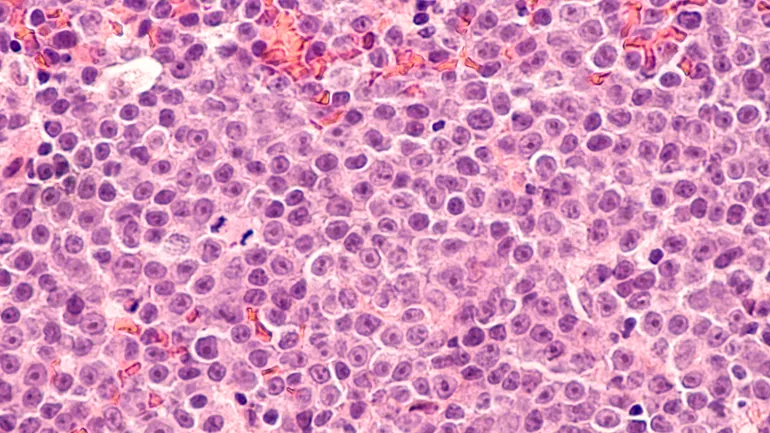
In a Phase 3 trial, Genmab and AbbVie's Epkinly plus chemotherapy cut the risk of disease progression or death by 51% compared to chemotherapy alone in newly diagnosed diffuse large B-cell lymphoma (DLBCL). The results exceeded investor expectations and topped Roche's Polivy, positioning Epkinly to become the first drug of its kind approved in first-line DLBCL. Genmab shares rose as much as 14%. Analysts see blockbuster potential, with peak sales estimates ranging from $1.4 billion to $3 billion annually, though competition looms from Roche's Lunsumio and AstraZeneca's Calquence.