


Latest news

NeuroVista Labs, a Brazilian biotechnology company developing a neuroplasticity-focused drug discovery program, announced that its synthesized research compounds have entered in vitro testing in Brazilian laboratories. This milestone marks the program's transition from computational research to experimental evaluation. The company, based in Curitiba, is conducting research in Brazil while building a development strategy centered on the U.S. pharmaceutical market. CEO Ravi Kaiut stated that advancing to laboratory testing provides an opportunity to generate experimental evidence to move the strategy forward. The program remains at an early preclinical stage, and the compounds' safety and efficacy in humans have not been established.

Precis Engineering + Architecture, an award-winning design firm with offices in Ambler, Pa., and Cary, N.C., has hired G. Edward Richert, PE, LEED AP, as Director – Engineering Services in its Cary office. Richert has 30+ years of pharmaceutical and biotechnology facility design and operations experience on both the owner/client and consulting engineering sides of the industry. In his role, he serves as a technical resource across all Precis disciplines, supports new business development, and oversees project deliverable quality controls. His background includes sustainable capital project engineering design, energy management, strategic planning, product/process validation, and FDA design control implementation, with design experience spanning utilities and infrastructure, laboratories, medical device facilities, active pharmaceutical ingredient plants, oral solid/liquid dosage facilities, sterile fill suites, and aseptic processing facilities. Richert holds M.S. and B.S. in Engineering Science degrees from the University of Florida, is a registered professional engineer in 11 states, and is a member of ASHRAE and ISPE.
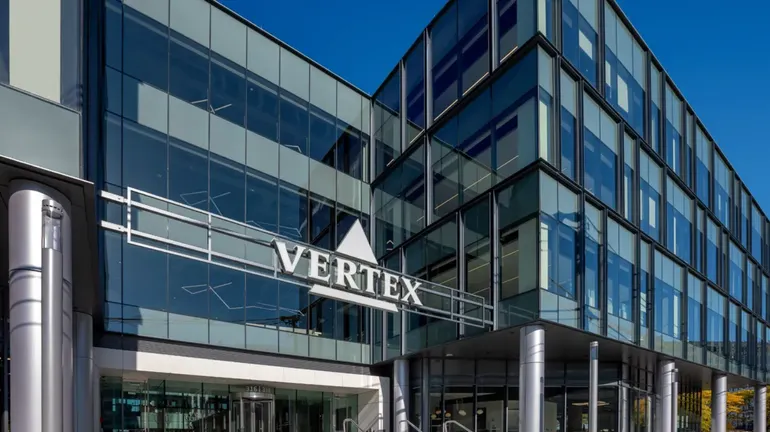
Vertex Pharmaceuticals reported third-quarter revenue of $3.44 billion, a 12% increase year-over-year, with over 95% coming from its cystic fibrosis portfolio. The company slightly raised its annual revenue guidance to $13.15-$13.25 billion. Despite mixed performance in non-CF drugs and a 3% stock dip, executives expressed strong confidence in their ability to launch povetacicept, a kidney disease treatment awaiting an FDA decision by the end of the month. Analysts view the reassurances as encouraging, highlighting the potential for a renal franchise exceeding $10 billion in peak sales.

A new KFF analysis finds that average monthly premiums for standalone Medicare Part D plans will jump 50% in 2027, from $34 to $51, if enrollees remain on their current plans. About 25 million seniors rely on standalone Part D coverage, and 10.4 million who don't qualify for financial help will pay more unless they switch. Premiums for available plans range widely, from $6.50 to $204.50, making plan shopping during open enrollment critical. The increase is steeper than the Trump administration's projection of less than $1. KFF also notes that the standard deductible will rise to $700 and that most enrollees will face coinsurance rather than copays. The premium spike could drive more seniors toward Medicare Advantage, which offers lower average premiums but comes with potential downsides like limited networks and prior authorization.

The FDA has agreed to review UniQure's approval application for its Huntington's disease gene therapy and is expected to decide by May 1. Bright Minds Biosciences' application for a mid-stage trial of oral antiseizure drug BMB-101 was placed on partial clinical hold due to mouse toxicity. Specific Biologics closed a $35 million Series A round led by Hatteras Venture Partners. Teva Pharmaceuticals will stop early a mid-stage study of emrusolmin in multiple system atrophy after an interim futility analysis. CinRx Pharma and Graviton BioScience formed a joint venture, CinRock Pharma, to develop ROCK2-inhibiting drugs for cardiovascular conditions.

Karyopharm Therapeutics, a cash-strapped cancer drugmaker, has filed for Chapter 11 bankruptcy to sell itself and reorganize. Through the filing, Karyopharm intends to hold an auction with Ayrmid, parent of cell therapy maker Gamida Cell, as the lead bidder. Karyopharm will continue operating during the proceedings with a $55 million bankruptcy loan from its lenders, and an acquisition should close in early 2027. Karyopharm sells the blood cancer drug Xpovio, approved for multiple myeloma in 2019 and later for a common lymphoma, with potential myelofibrosis approval pending. Despite bringing a drug to market, Karyopharm has not turned a profit and reported $115 million in 2025 net Xpovio sales, $196 million in losses, and a $1.8 billion accumulated deficit. The company warned it only had cash to last through mid-2026 and faces $15.8 million in debt due. Ayrmid CEO Joe Wiley said adding Xpovio to Gamida Cell's blood cancer cell therapies could build a broader hematology business. Karyopharm shares fell 83% to 11 cents, giving a market value of $2.5 million, with $55 million in cash as of June 30.
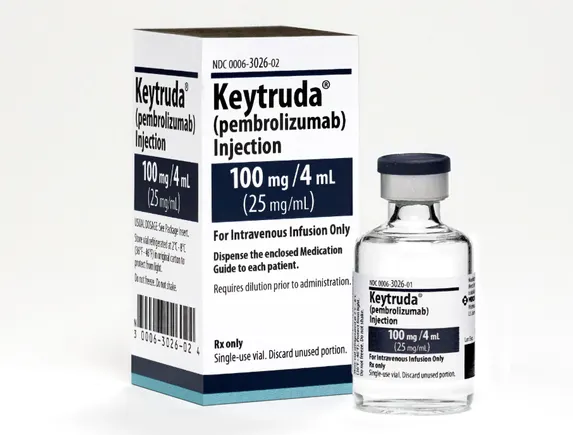
The FDA has accepted the first publicly announced application for a Keytruda biosimilar, FYB206, with potential approval in Q3 2027. About a dozen other candidates are in development as Keytruda's key patents begin to expire in 2028. Despite regulatory support, biosimilars face an uphill battle due to strategic deals between branded manufacturers and PBMs that favor established products, creating anti-competitive incentives. While the FDA's Biosimilars Action Plan and a streamlined development pathway for FYB206 could set a precedent, market hurdles remain. Biosimilars currently hold less than 20% market share despite potential savings, and without unwinding the complex web of deals, competition may not translate into lower costs. Companies may be discouraged from developing biosimilars if the system remains rigged against them.

AstraZeneca reiterated its $80 billion revenue target by 2030 and unveiled a $1.5 billion annual cost-savings program, 'Reshaping for Sustainable Growth,' which includes a $2 billion restructuring charge and reinvestment in R&D and AI. Alnylam Pharmaceuticals reported $1.13 billion in third-quarter Amvuttra revenue, in line with expectations, but shares fell more than 20% on concerns about Medicare reimbursement changes and UnitedHealth's restrictive policy, raising questions about the drug's growth outlook. Regeneron Pharmaceuticals shares rose 13% after reporting record quarterly sales: Dupixent at $6.5 billion (up 35%), high-dose Eylea at $700 million, and Libtayo at $550 million, all beating estimates. Analysts highlighted Regeneron's successful defense against biosimilar competition and noted pipeline prospects, including an RNA-based medicine licensed from Alnylam for MASH.

International reference pricing, accelerated by President Trump's May 2025 executive order, has led to widespread voluntary agreements among drugmakers and an apparent decline in EU new drug launches. Coupled with the EU's Joint Clinical Assessment and stricter HTA evidence standards, these shifts demand integrated scenario modeling. Experts from Cencora argue that sequential, siloed planning is no longer viable; instead, cross-functional teams must use AI to test complex trade-offs across regulatory, market access and pricing decisions from the earliest stages of development.

The May 2025 executive order on most-favored-nation pricing has led 14 of 17 large drugmakers to sign voluntary agreements, with participation reaching ~89% of the branded market. This shift, alongside the EU's Joint Clinical Assessment and stricter HTA evidence standards, is reshaping global commercialization. Cencora experts argue that traditional single-function scenario modeling is no longer viable; instead, integrated scenario modeling—incorporating policy, regulatory, market access, and other functions, and supported by AI—is essential for navigating complex trade-offs and ensuring timely patient access.